

Everyone does the Golden Circle. And everyone does it the same way — tour bus at 10am, shoulder to shoulder at Geysir, selfie at Gullfoss, back to Reykjavik by 5pm. There’s nothing wrong with that. But if you have a car and any flexibility at all, you can have a completely different experience on the exact same route.
Here’s what I actually did, what surprised me, and what I’d change if I went back.
The Timing Problem — And the Simple Fix
The Golden Circle gets crowded fast. By mid-morning the main parking lots are full, the viewing platforms are packed and Geysir erupts in front of a wall of phones. It’s still impressive — Strokkur going off every five to ten minutes is genuinely spectacular — but the atmosphere is not exactly peaceful.
The fix is simple: leave Reykjavík by 7am. One thing to budget for: parking at Þingvellir costs 1,000 ISK for the day, paid at the machine or online. Entry to the park itself is free, as it is at Geysir and Gullfoss. Þingvellir at 8am is a completely different place than Þingvellir at 11am. The light is better, the air is clearer and you’ll have the canyon paths almost to yourself. By the time you reach Geysir the tour buses are just arriving — you’re already done and moving on.
Going anti-clockwise also helps. Most tours run clockwise — Þingvellir first, then Geysir, then Gullfoss. If you have flexibility, reversing the order means you hit each stop slightly out of sync with the crowds.
Þingvellir: Go Off the Main Path
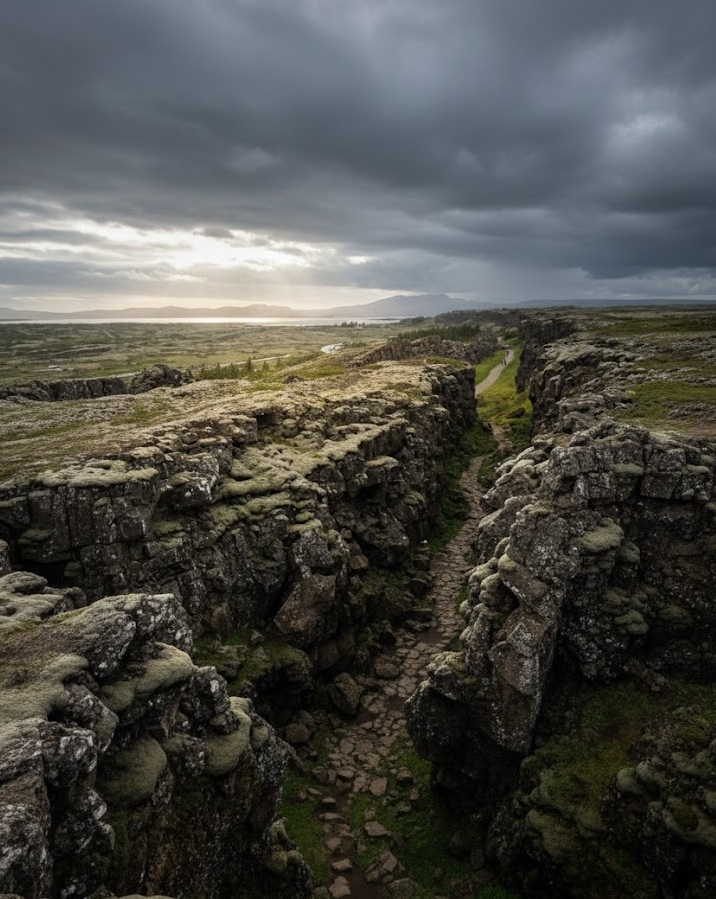
Þingvellir is where the Eurasian and North American tectonic plates meet — you can literally walk between two continents along the Almannagjá canyon. Most visitors walk the main path, take a photo and move on.
What most people miss: the trails that branch away from the main canyon into the national park. Even 15-20 minutes off the main route and the crowds disappear completely. The landscape is extraordinary — volcanic rock, birch woodland, the lake stretching out below. If you have a campervan, the campsite inside the national park is one of the better spots on the Ring Road. Waking up inside Þingvellir with nobody around is a very different experience from arriving at 11am with a tour group.
Geysir: Impressive Regardless
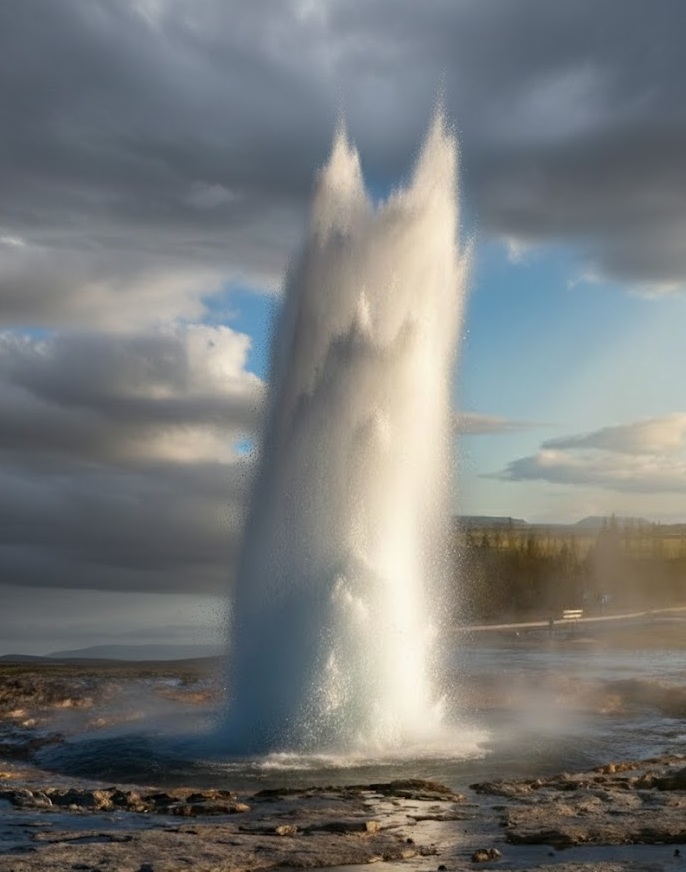
There’s no getting around it — Geysir is crowded. Strokkur erupts every five to ten minutes — occasionally you wait fifteen — and it is surrounded by people with cameras at all times. But it’s also genuinely impressive regardless of the crowds. The scale of the eruption, the sulfur smell, the boiling pools around it — it earns its reputation.
My advice: arrive early, watch a few eruptions, then walk to the edges of the geothermal field away from the main viewing area. The landscape there is almost lunar — steaming vents and brightly coloured mineral deposits — and far fewer people bother to walk five minutes from the car park.
Gullfoss: The Waterfall That Earns Its Fame
Gullfoss is a two-tiered waterfall that drops into a canyon at a right angle — the kind of geological feature that shouldn’t exist but does. It’s genuinely one of the most impressive waterfalls I’ve seen and the mist on a clear day creates constant small rainbows.
It’s also busy. Same advice applies: early morning or late afternoon. The light is better and the viewing platforms are manageable rather than overwhelming.
Kerið Crater: Add It, It’s Worth It
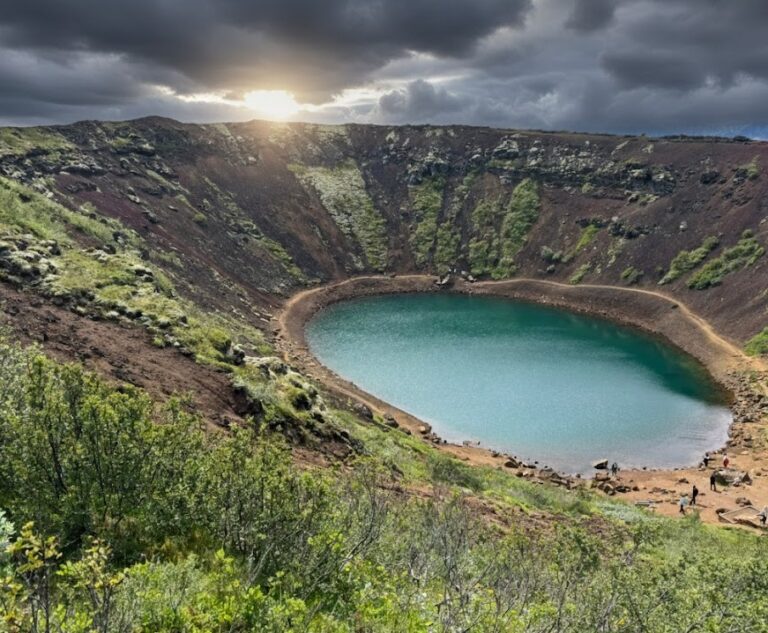
Kerið is often skipped because it charges an entry fee — 600 ISK, roughly €4, children under twelve free, paid at a self-service kiosk. Skip the people who skip it. The crater is a perfectly formed volcanic caldera with a vivid turquoise lake at the bottom and bright red volcanic rock on the rim. It takes maybe 30-40 minutes and on a clear day the colours are extraordinary.
It also tends to be quieter than the main stops, especially if you time it between tour bus arrivals. Easily the best value for money on the whole route.
Two Waterfalls Worth the Detour — South Coast, Not Golden Circle
These two are not on the Golden Circle. They sit an hour further along the south coast, and I am including them because the most common mistake is treating the two as separate days when they combine well.
Gljúfrabúi is hidden inside a narrow canyon just minutes from the famous Seljalandsfoss. You wade through a shallow stream and step inside the rock to find yourself standing in an enclosed gorge with a waterfall dropping from the ceiling. It’s one of those genuinely surprising moments that Iceland occasionally produces. Far fewer people find it than Seljalandsfoss — which is directly next door — because it requires a bit of effort to get to.
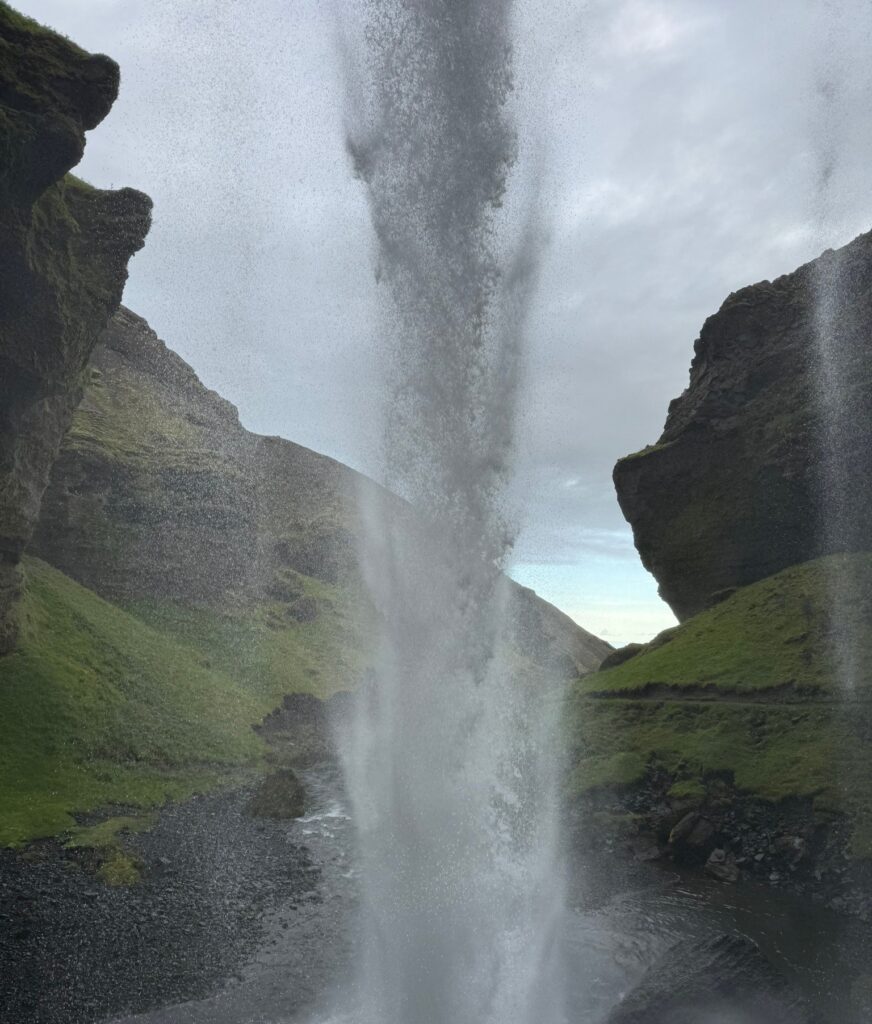
Kvernufoss is a 10-minute walk from Skógafoss — one of Iceland’s most famous waterfalls — but almost nobody makes the effort. I arrived at around 7pm and had it completely to myself. You can walk behind the waterfall into the gorge and stand in the spray. If you’re combining your Golden Circle with a south coast day — which I’d recommend — don’t miss it.
Friðheimar: Good, Not Essential
Friðheimar is a tomato farm restaurant on the Golden Circle route that serves tomato-based dishes in a greenhouse surrounded by growing plants. I ate there. It is charming, the food is good, and the setting genuinely is unusual. It was also packed — every table taken, and the noise level is closer to a canteen than to the quiet greenhouse the photos suggest. The tomato soup buffet with unlimited bread starts around 2,990 ISK, and a full order for one lands closer to 9,000 ISK. It is also very popular and needs a reservation well in advance — walk-ins get turned away in summer.
My honest take: worth doing if you plan ahead and enjoy that kind of culinary tourism. If you haven’t booked, don’t stress. The food is good rather than exceptional, and the experience is more about the novelty of the setting than the cooking. There is also a smaller café next door with a shorter menu — that is the option if you turn up without a reservation. Plenty of good alternatives in Reykjavik for dinner.
What to Skip (Or At Least Not Prioritise)
The Secret Lagoon is often added to Golden Circle itineraries. It’s a natural hot spring in Flúðir and a pleasant soak, but compared to Hvammsvík or even Sky Lagoon the experience is fairly basic. Worth it if you specifically want a hot spring on the route — not worth going out of your way for.
The plane wreck at Sólheimasandur is sometimes grouped with Golden Circle day trips but it’s on the south coast and a separate detour. If time is limited, Reynisfjara black sand beach and Dyrhólaey (the puffin headland) are better uses of your time in that area.
My Suggested Order for a Full Day
Leave Reykjavik by 7am. Þingvellir first — walk the canyon, go off the main path. Geysir by 10am before the buses arrive. Gullfoss. Kerið on the way back. If you’re extending to the south coast: Seljalandsfoss and Gljúfrabúi, then Kvernufoss before dinner.
That’s a long day. But it’s the Golden Circle as it’s meant to be done — at your own pace, with the right timing, and without the feeling that you’re on a conveyor belt.
Planning your Iceland trip?
My Iceland Ring Road Campervan Guide covers the Golden Circle, south coast, north Iceland and everything in between — day by day, with campsites, driving times and the stops most guides leave out.
Before you go
Planning your own Ring Road trip?
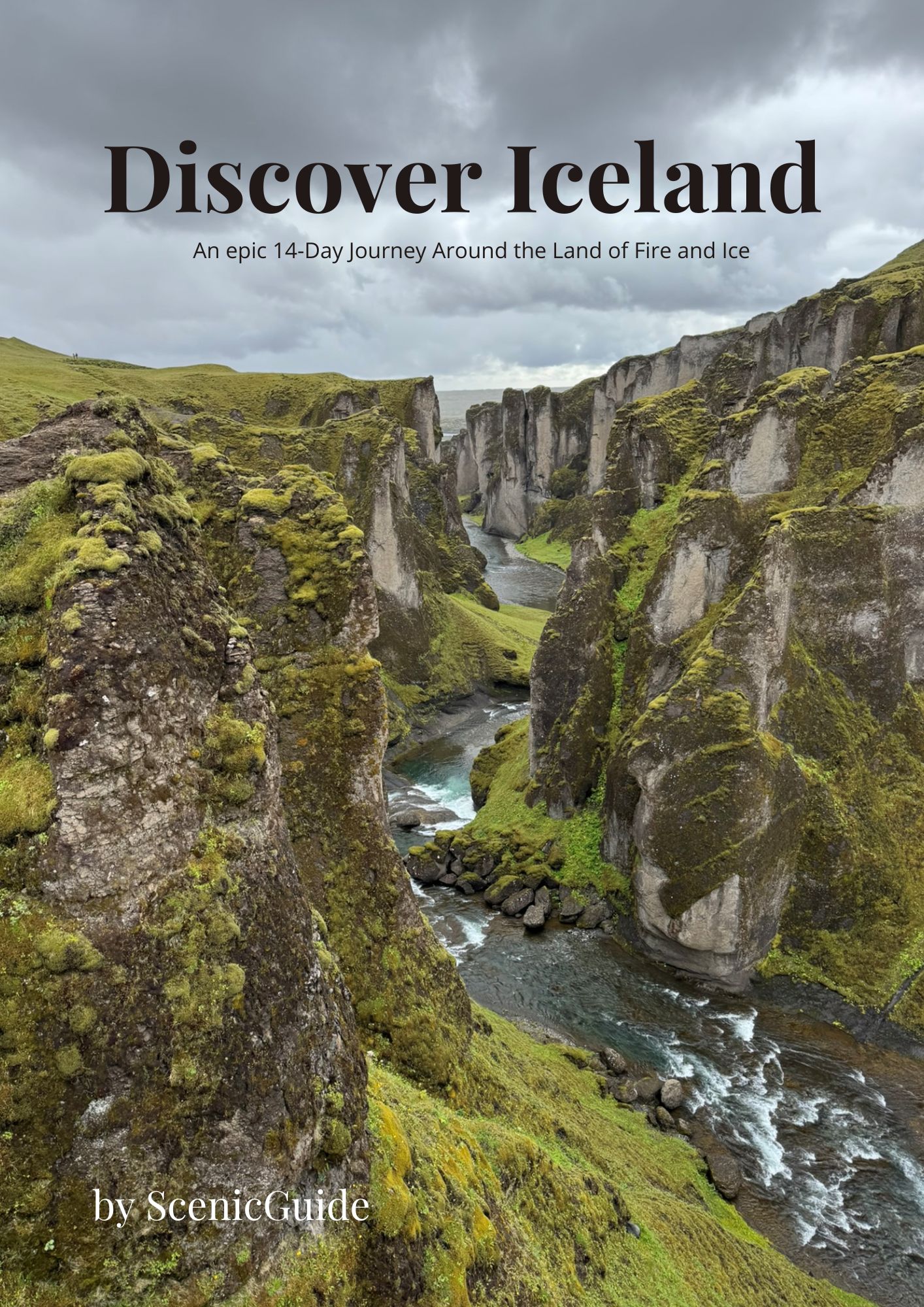
Iceland Ring Road Campervan Guide
My full 14-day route — 2,500 km, every campsite, what I spent, and the detours worth taking. The plan I drove, in one PDF.
Advertising disclosure: The rental links below are affiliate links. If you book through one of them I earn a small commission — the price stays exactly the same for you.
How I booked my campervan
I compared three rentals before I chose mine. These are the ones worth checking — Lava gives 5% off with code CREATOR.