

I spent 14 days circling Iceland in a campervan, and the campsite question is one people stress about far more than they need to. There are dozens of options along the Ring Road — most decent, some forgettable, a few genuinely memorable. Here are the ones worth knowing about, plus the honest truth about what camping in Iceland actually looks like. All campsites below are stops on my full 14-day Ring Road itinerary.
One thing upfront: you don’t need to book most of these in advance. The system works on a simple roll-in basis — you arrive, find a pitch, pay the warden or at the terminal. The only exception is the Reykjavík Campsite in peak July, which I’d recommend pre-booking or avoiding altogether for reasons I’ll get into below.
Near Reykjavík: Skip the City Campsite, Stay Here Instead
Most people default to the Reykjavík Campsite because it’s convenient. I get it. But honest assessment: it’s crowded, it’s not particularly scenic, and it feels more like a parking lot than a campsite. It does the job for a first night when you’ve just landed and need somewhere functional — but that’s all I’d use it for.
The better option nearby is Mosskógar Camping, about 17 km outside the city in the Mosfellsdalur valley. This was one of my genuine surprises on the whole trip. The pitches are separated by hedges — actual privacy, which is rare in Iceland. There’s a solid indoor lounge, an indoor and outdoor kitchen, and the showers are included in the price. It has a warmth to it that the city campsite completely lacks.
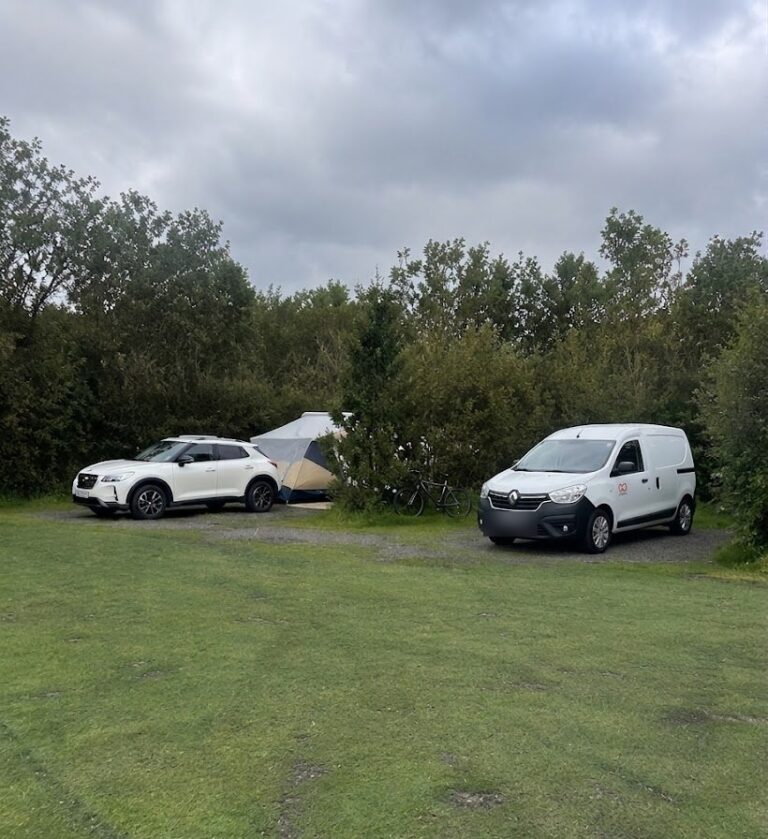
One practical note: Mosskógar is cash only, but they accept USD and EUR as well as ISK — so that’s not a real problem as long as you know in advance.
For getting your campervan sorted before heading out, see my campervan rental comparison — the three companies I looked into, what each one charges, and the 5% Lava code.
Snæfellsnes Peninsula: One of My Favourite Spots on the Whole Trip
If you’re doing the Ring Road, Snæfellsnes is worth the detour — and the campsite I stayed at matches the setting perfectly.
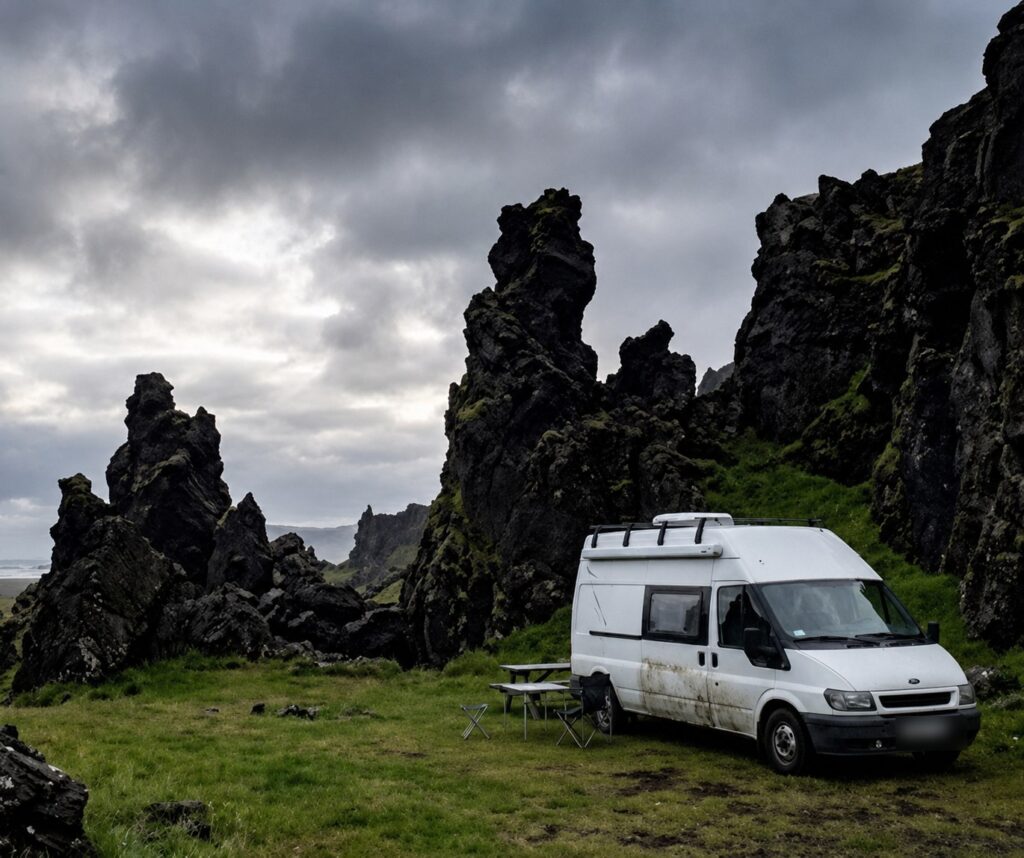
Tjaldsvæðið á Hellissandi sits near the tip of the peninsula, tucked among lava rock formations. You can park right between the rocks for real wind protection and genuine seclusion. The showers were some of the best I found anywhere in Iceland. The price (around 2,000 ISK per person, card payment to the warden) is fair for what you get.
It’s not a campsite with a stunning view in the classic Instagram sense — but the atmosphere of being surrounded by lava fields on the edge of the peninsula is something I keep thinking back on. If you’re spending a night on Snæfellsnes (and you should — see my Snæfellsnes guide for how long to spend), this is where I’d stay.
North Iceland: The Coastal One That Hits Different
Camping 66.12 North on the Tjörnes Peninsula, north of Húsavík, is not for everyone. It’s exposed — genuinely windy and cold even in summer. The facilities are basic. There are only two showers.
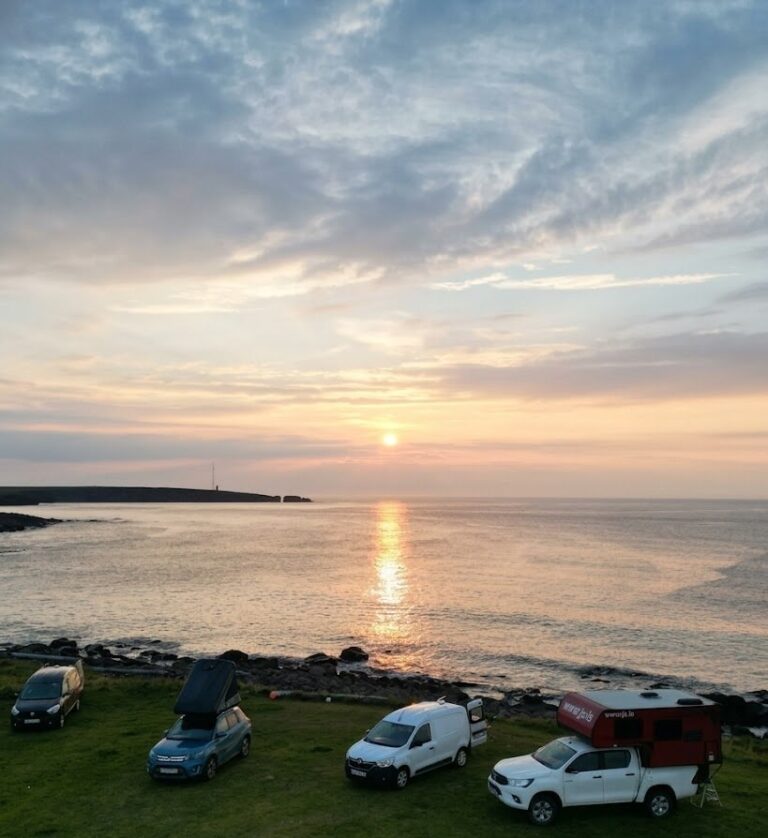
But the location is something else. You’re parked right at the coast, watching the light change over the water. It has a rawness that most Iceland campsites don’t — and that’s exactly what some people come to Iceland for. I’d recommend it if you’re comfortable with the tradeoff: less comfort, more atmosphere. Pack warm layers regardless of the time of year.
National Park Campsites: Worth It for the Setting Alone
Two national park campsites stand out for different reasons.
Ásbyrgi Campsite sits inside Ásbyrgi Canyon — one of those spots that makes you feel like you’re camping inside a different planet. The facilities are basic, but the camping fee often includes canyon parking, and the hiking trails start right from the site. I wouldn’t go expecting great showers. I would go for the experience of waking up inside those canyon walls.
Camping Þingvellir (Thingvellir) is a different proposition — a UNESCO World Heritage site with, surprisingly, solid facilities. Multiple camping areas, service huts with toilets, outdoor sinks, and grills. No reservation needed, flexible arrival. Showers are available in summer. For a national park campsite, the infrastructure is genuinely good. It’s also one of the best bases for the Golden Circle — see my Golden Circle guide for what I’d actually prioritise there.
South Iceland: Practical and Well-Located
Near Skaftafell, the Skaftafell Campground inside Vatnajökull National Park is the obvious choice — clean, modern, easy access to trails. It’s big and can feel busy, but the location next to the glacier is hard to argue with.
Further along near Vík, Tjaldstæðið Kirkjubær II offers something different: a quiet countryside atmosphere, fewer people, affordable prices. If you want to avoid the South Coast crowds for one night and just have a calm stop, this is a good shout.
How Much Does Camping Actually Cost?
On my 14-day trip, campsite fees ranged roughly from 1,500 to 3,000 ISK per person per night depending on location and facilities. Showers are often extra, usually a few hundred ISK for a few minutes, and every site adds a lodging tax of 400 ISK per night on top.
I go into the full budget breakdown — camping, fuel, food, everything — in my Iceland Ring Road cost post, which has the actual numbers from my trip.
A Few Things Nobody Tells You About Camping in Iceland
Wild camping is illegal. You must stay in official campsites — no exceptions. This is enforced and the fines are real.
The Camping Card depends on how many of you there are. It costs around 26,000 ISK and covers two adults plus up to four children for 28 nights, so for a couple it pays for itself inside a week. Travelling alone over 14 nights it is close to break-even. Either way it only works at the 40-odd sites in the scheme, and several of the best ones do not participate — check it against your route before buying.
Wind is serious. The “Icelandic Rule” applies to your campervan door too — hold it when opening in exposed locations or the wind will rip it off the hinges. I’ve seen it happen.
Iceland is nearly cashless — but Mosskógar Camping near Reykjavík is a notable exception. Keep some EUR or USD in your bag just in case.
My Full Campsite Guide Is in the PDF
This post covers my highlights, but my 14-day Iceland Ring Road Campervan Guide goes through every overnight stop across the full route — including campsite names, approximate costs, what’s nearby, and where to eat at each location. 10 regions, honest ratings, nothing generic.
If you’re still deciding on a vehicle, my campervan rental comparison covers 2WD against 4WD, the insurance you actually need — gravel protection is not optional — and which of the three I booked.
Before you go
Planning your own Ring Road trip?
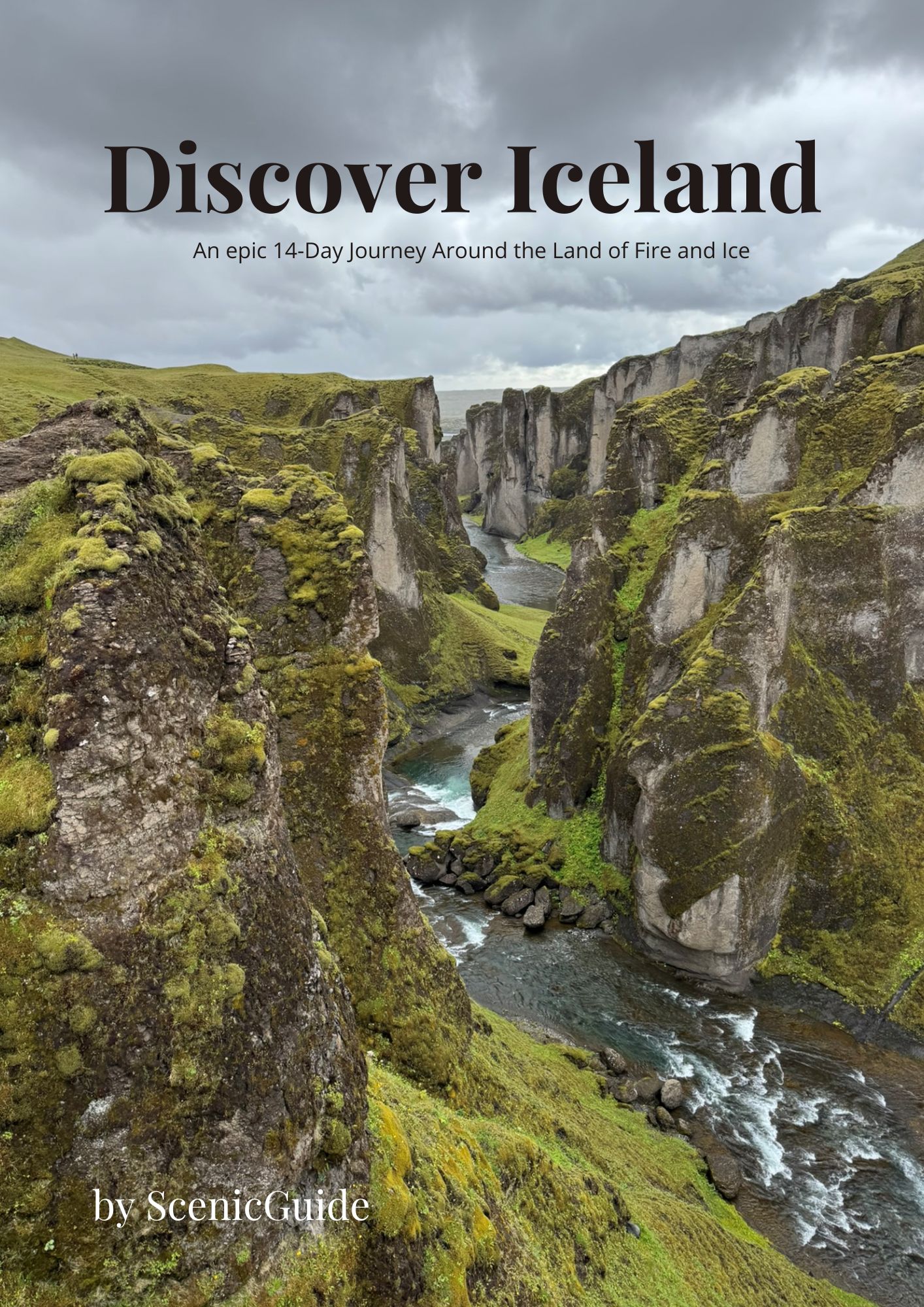
Iceland Ring Road Campervan Guide
My full 14-day route — 2,500 km, every campsite, what I spent, and the detours worth taking. The plan I drove, in one PDF.
Advertising disclosure: The rental links below are affiliate links. If you book through one of them I earn a small commission — the price stays exactly the same for you.
How I booked my campervan
I compared three rentals before I chose mine. These are the ones worth checking — Lava gives 5% off with code CREATOR.