

I drove Iceland’s Ring Road solo in a campervan for 14 days. I never felt unsafe. The roads are well-maintained, the route to every major sight is paved, and the country is genuinely one of the easiest places I’ve driven in. Nobody needs to be scared off by Iceland driving advice. Every tip below comes from my full 14-day Ring Road itinerary.
That said, there are a few things worth knowing before you arrive — not because Iceland is dangerous, but because it has its own conditions that don’t exist at home for most visitors. Common sense covers most of it. A little preparation covers the rest.
The Apps Worth Downloading Before You Land
These three are worth having on your phone before your flight:
Veður — Iceland’s official weather app. This is what locals use. Not Google Weather, not your phone’s default forecast. Veður gives you accurate wind speed and direction by location, which matters more than anything else in Iceland.
Færð & Veður — road conditions. Check this every morning. Roads close overnight. F-roads that were passable yesterday may not be today. Takes thirty seconds and saves you a wasted detour.
SafeTravel — Iceland’s search and rescue app. Register your travel plan here if you’re heading anywhere remote. The volunteer rescue team (Landsbjörg) is who comes for you if something goes wrong, and they’re excellent. Their website also has a live wave warning system for Reynisfjara beach.
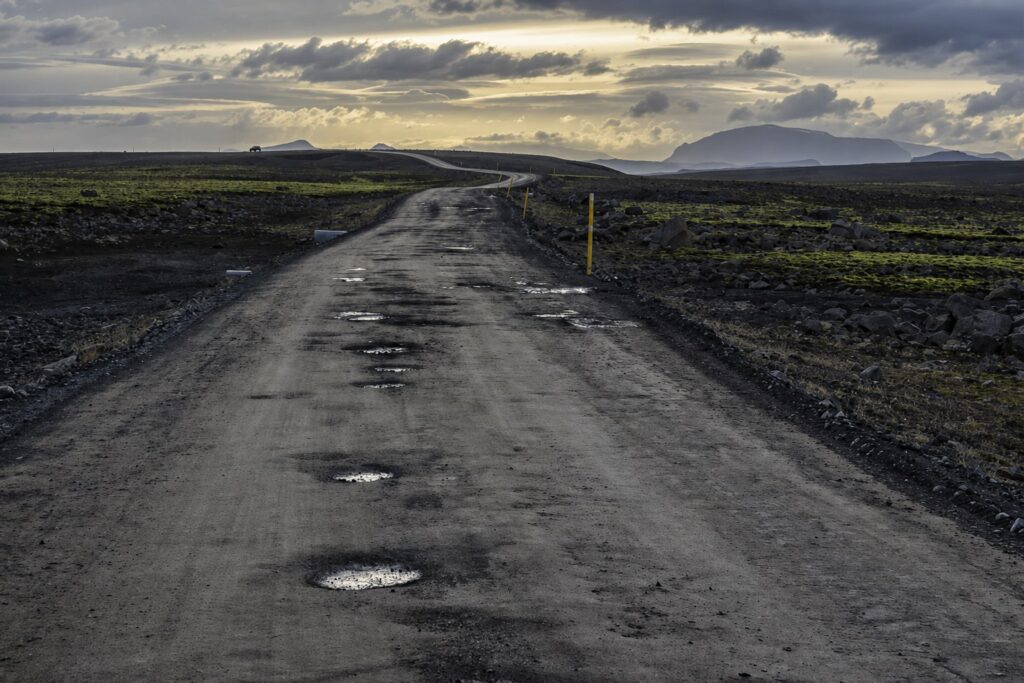
Bookmark road.is as well. Black roads on the map are paved and fine. Brown roads are gravel — and in Iceland, gravel can mean fist-sized rocks. The Layers menu shows webcam feeds and wind data.
Wind Is the Variable Nobody Talks About
Rain you can dress for. Cold you can layer for. Wind is the one that catches people off guard.
I had a campervan door nearly ripped off its hinges near the south coast. I’ve driven through conditions where the vehicle was visibly moving sideways. I’ve seen car doors dented in car parks from a single gust.
One specific thing worth knowing if you’re considering a roof tent setup: in Iceland, wind can make a roof tent genuinely unusable for a night or two — you’ll be lying there listening to the fabric snap and wondering if it’ll hold. A built-in campervan is a better call for Iceland specifically because you can always just sleep inside if conditions turn. It’s one of the reasons I’d always recommend a proper campervan over a roof tent vehicle for a Ring Road trip.
Check the wind forecast before every driving day. Anything above 20 m/s is serious for high-sided vehicles. The forecast uses four colours. Yellow means take care, particularly in a high-sided vehicle. Orange means the weather is genuinely dangerous and you should change your plans. Red is a state of emergency — the Met Office then advises against travel altogether.
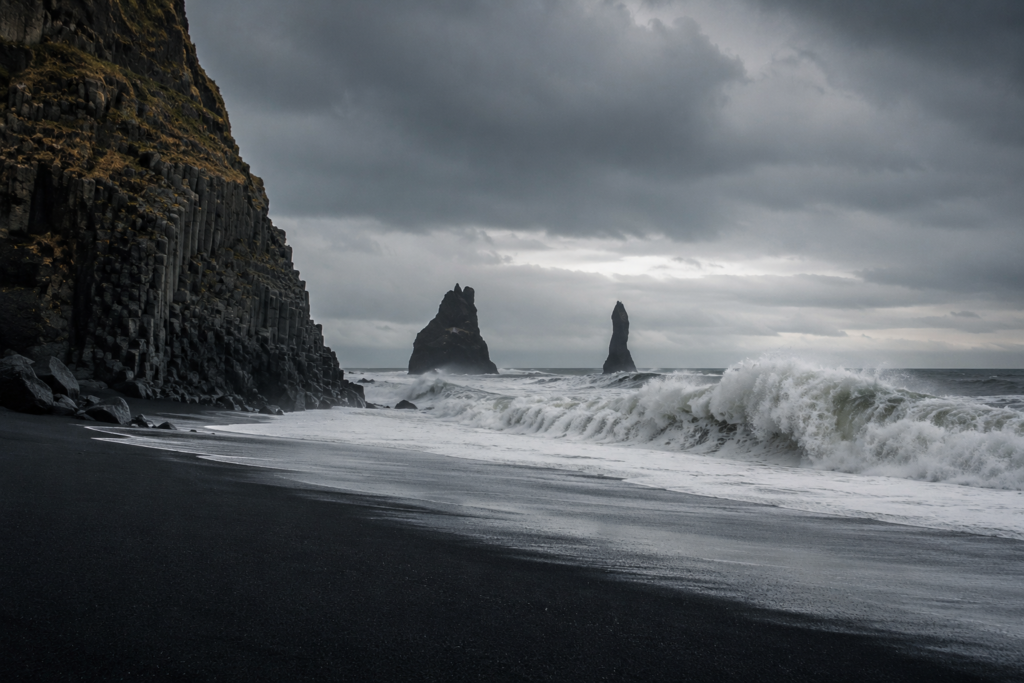
Reynisfjara Black Sand Beach
This is the one place where I’d say: take it more seriously than it looks.
The sneaker waves at Reynisfjara come from a sea that can look completely calm. They’re powerful, they arrive without warning, and they’ve killed people who were simply standing too close to the waterline. The beach is one of the most dramatic places I’ve ever seen — go, absolutely go — but stay well back from the water and never turn your back on the ocean.
Check the SafeTravel wave warning before you visit. It takes ten seconds.
F-Roads and River Crossings
Everything on the Ring Road and to every major sight is paved and perfectly driveable in a standard vehicle. You don’t need a 4WD for the south coast, the Golden Circle, Mývatn, or Snæfellsnes.
F-roads are a different story. They require a proper 4WD — not all-wheel drive, not a standard SUV. Your rental agreement matters; most companies explicitly prohibit certain F-roads and won’t cover damage if you ignore this. River crossings are the real wildcard — water levels change with weather and snowmelt, and what looks manageable can be deceptively deep.
If F-roads and highlands aren’t on your itinerary, none of this applies to you. The Ring Road itself is straightforward.
A Few Practical Things
The emergency number is 112. Save it in your phone now.
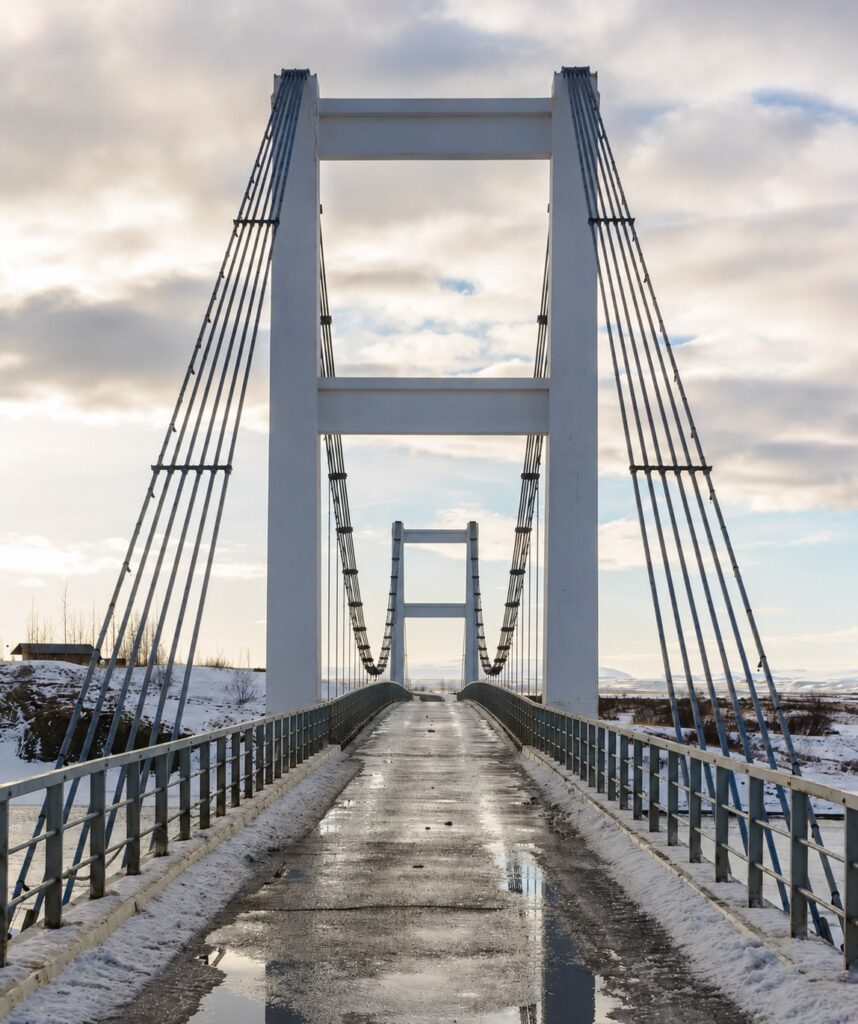
One-lane bridges are signed Einbreið brú on a yellow warning sign, usually a few hundred metres ahead. The rule is simply that whoever reaches the bridge first goes first — if you are clearly further away, hold back and let the other car cross. The limit on the bridge itself is 50 km/h. They appear more often than you would expect, including on the Ring Road, and it becomes second nature quickly.
Speed limits are enforced. 90 km/h on paved roads, 80 km/h on gravel. Fines are significant.
Sheep wander onto roads constantly from late spring through autumn. They’re unpredictable and often travel in groups. Slow down when you see them near the road — this is just part of driving in Iceland.
The Honest Summary
Iceland rewards people who respect it. That doesn’t mean being fearful — it means checking the weather before a long drive, staying back from the waves at Reynisfjara, and not assuming your roof tent will hold in a south coast storm.
Do those things and you’ll have one of the best road trips of your life. The roads are good, the country is extraordinary, and the feeling of driving through a landscape that looks like another planet never really goes away.
My Iceland Ring Road Campervan Guide covers everything else — costs, vehicle choice, which days to plan for what, and the stops most people miss.
Before you go
Planning your own Ring Road trip?
Iceland Ring Road Campervan Guide
My full 14-day route — 2,500 km, every campsite, what I spent, and the detours worth taking. The plan I drove, in one PDF.
Advertising disclosure: The rental links below are affiliate links. If you book through one of them I earn a small commission — the price stays exactly the same for you.
How I booked my campervan
I compared three rentals before I chose mine. These are the ones worth checking — Lava gives 5% off with code CREATOR.