

The first time I pulled into Hverir, I nearly kept driving. Tour buses lined the parking lot, people were crowded around every mud pot with selfie sticks, and the sulfur smell hit me like a wall before I even opened the car door. I sat there for a moment and seriously considered skipping it.
Then I got out, walked past the main boardwalk, and hiked up the hill behind the fence. Five minutes later I was completely alone on an orange moonscape — steaming vents all around me, not another soul in sight. That’s Mývatn in a nutshell. Terrible first impression at the parking lot. Unforgettable once you get off the beaten path.
Advertising disclosure: Links and buttons marked with * are affiliate links. If you book through one of them I earn a small commission — the price stays exactly the same for you.
I had two days here in July, on the northern leg of a 14-day Ring Road loop, and this guide is my honest take on what’s worth your time, what’s overrated, and how to actually experience it without feeling like you’re on a group tour.
How Long Do You Need?
One full day is doable if you’re tight on time — you can hit the main geothermal sights, take a quick soak, and move on. But two days is where it gets good. You slow down, you catch things at the right light, and you stop making decisions based on where the tour buses aren’t parked yet.
Mývatn sits about 6–7 hours from Reykjavik along the Ring Road, or about an hour and a quarter from Akureyri. Most people blow through it in half a day. That’s a mistake.
Hverir: Go Early or Go Up the Hill
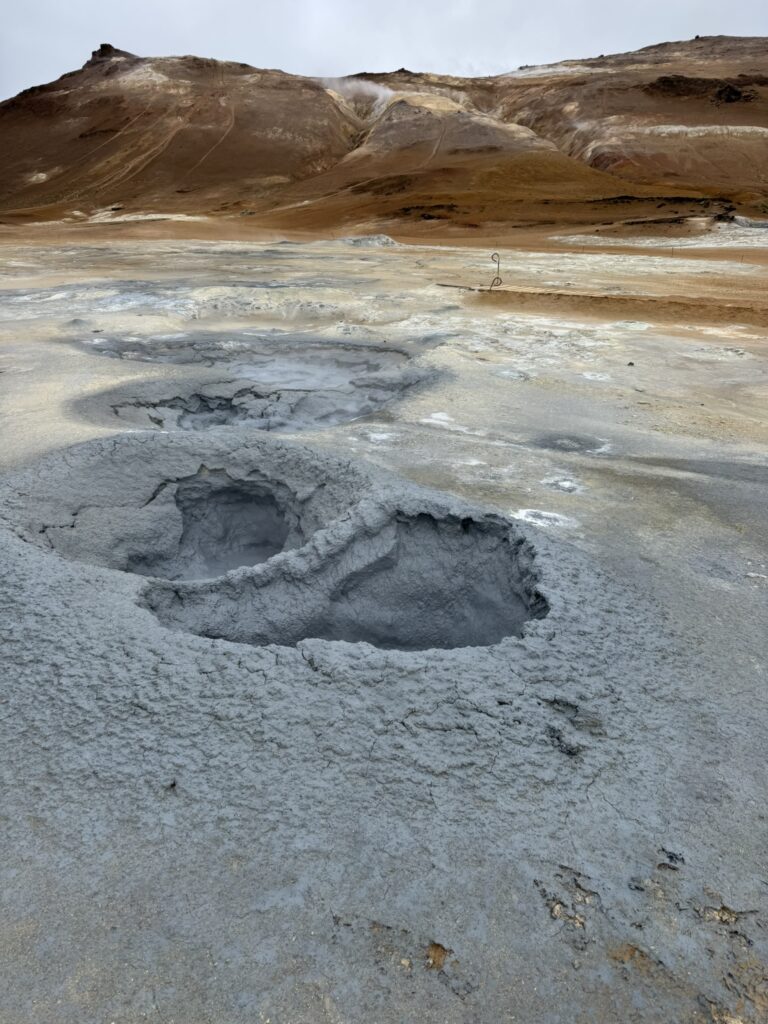
Hverir (also called Námaskarð) is the most dramatic geothermal area in the region — boiling mud pots, hissing fumaroles, earth in shades of orange and rust that look like they belong on Mars. It genuinely deserves its reputation.
The problem is everyone knows this. Midday in summer, the main boardwalk is a slow shuffle between cameras. My advice: either arrive before 9am when it’s quiet, or do what I did and walk up the hill directly behind the parking area. It takes maybe ten minutes and most visitors simply don’t bother. Up there you get the same volcanic landscape, the same steam and sulfur, and suddenly — silence. I stood there at golden hour with the whole place to myself and it became one of my strongest memories from the entire Ring Road. Worth every step.
The Hidden Lakeside Spot Most People Drive Past
I found Kálfaströnd completely by accident. I turned into a small parking area on the western shore of Lake Mývatn without really knowing why — just a gut feeling — and stepped out into one of the most quietly beautiful spots of my Iceland trip.
No crowds. No tour groups. Just the lake stretching out in front of you, pseudocraters dotting the far shore, and that specific Icelandic silence that feels almost loud once you notice it. The landscape here is impressive in a completely different way than the geothermal areas — softer, more still, almost gentle. If you have a campervan or a car, it takes five minutes to pull in and it costs you nothing. Most people drive straight past it on the way to the bigger attractions. Don’t.
Grjótagjá Cave: Worth It, But Time It Right
Yes, this is the lava cave from Game of Thrones. Yes, the turquoise water glowing inside is genuinely beautiful. And yes, it gets busy — but it’s also only a 10–15 minute stop, so the crowds move through quickly.
My practical tip: check the parking lot before you pull in. If a tour bus is sitting there, just drive on and come back 30 minutes later. Simple as that. The cave isn’t going anywhere and the difference between visiting with 40 people and visiting with 5 is enormous.
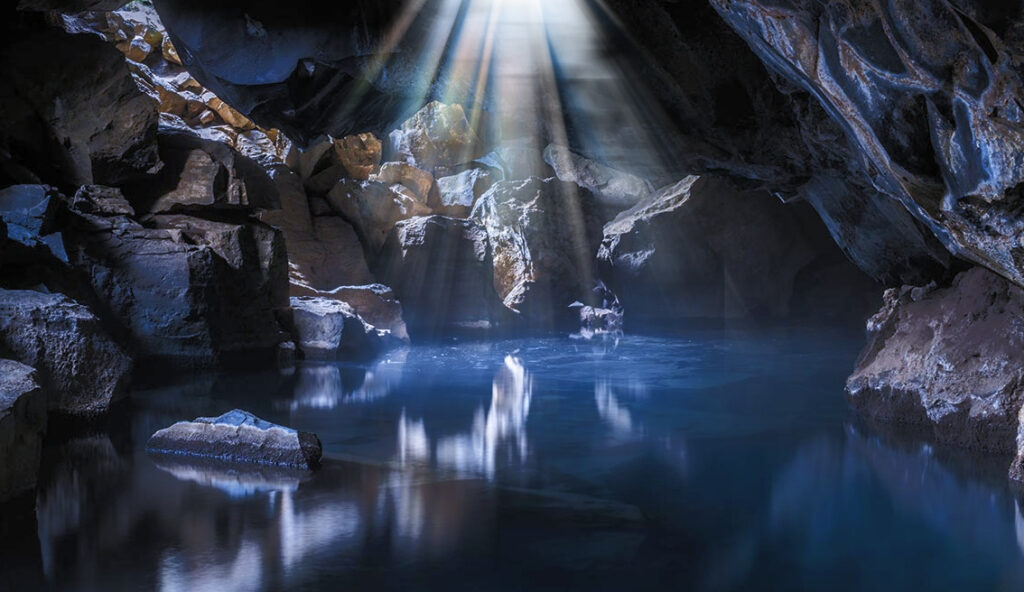
One note: bathing is no longer allowed. The water swings between roughly 40 and 50 °C, and the cave sits on private land whose owners have asked people to stay out. So this is purely a photography and atmosphere stop. Still worth it for both.
Dimmuborgir, Hverfjall & the Lake
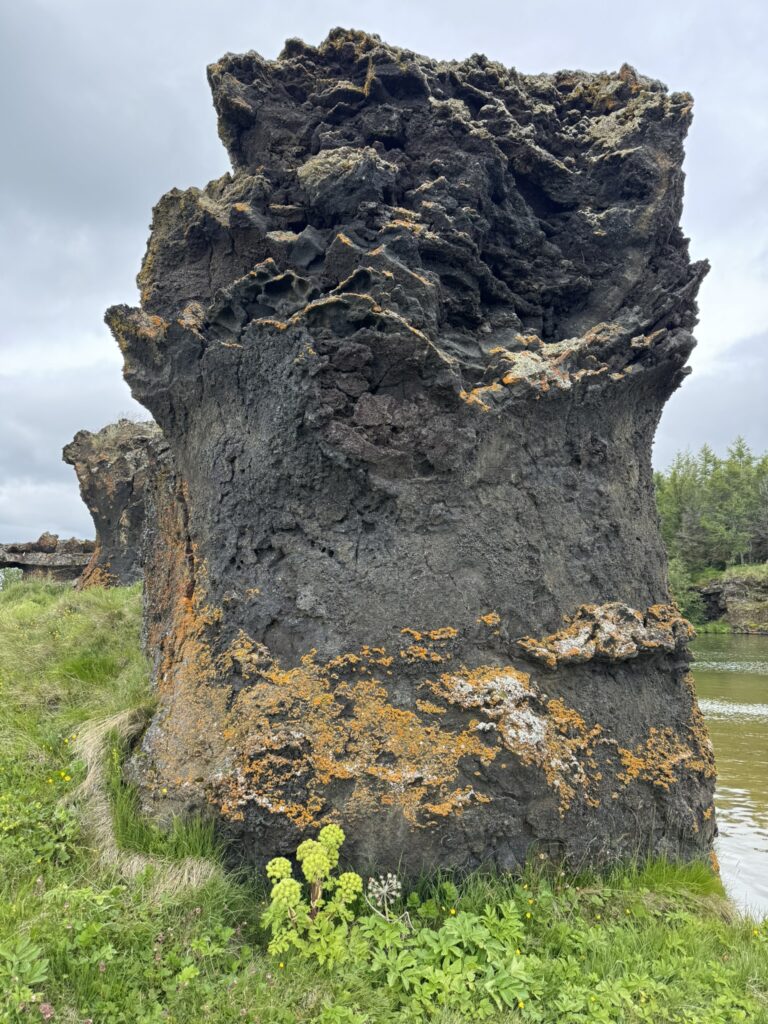
Dimmuborgir is a lava field with formations that look like something out of a dark fairy tale — twisted pillars and arches that took shape when lava cooled around water thousands of years ago. Easy walking, good for all fitness levels, and genuinely atmospheric especially in low light.
Pair it with Hverfjall crater if your legs are up for it. The climb to the rim takes 20–30 minutes, and the full 3 km loop around the top adds about an hour and the panoramic view over the whole Mývatn area from the top is one of those moments where you stop and just stand there for a while.
The lake itself is worth a slow drive around. Bring binoculars. Fifteen duck species breed at Mývatn, more than anywhere else in Europe, and Barrow’s goldeneye nests nowhere else on the continent.
Earth Lagoon: Good, But Know What You’re Paying For
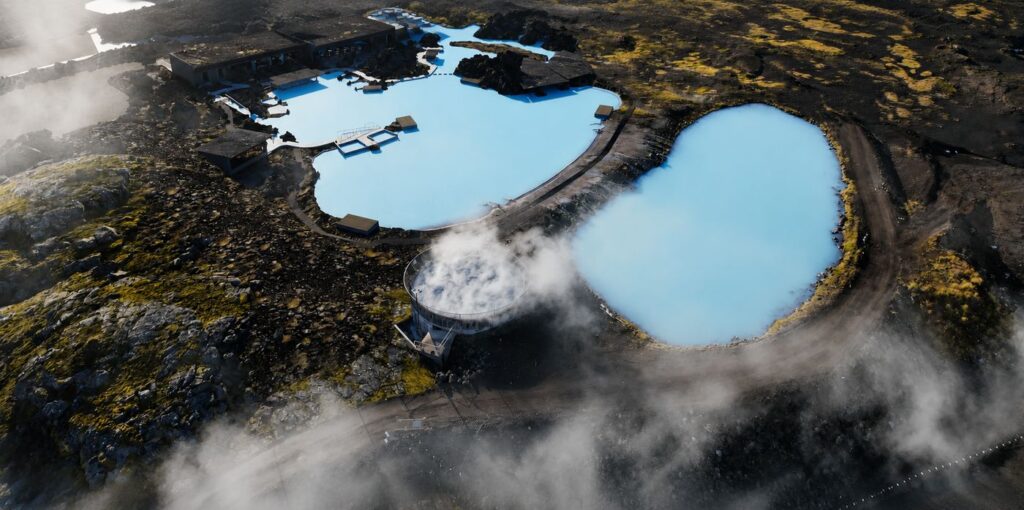
The former Mývatn Nature Baths reopened on 9 July 2026 as Earth Lagoon after a full rebuild. I soaked in the old baths, not the new ones, so what follows is what I know from the old version plus what the operator now publishes. The water is that same milky blue, the volcanic backdrop is dramatic, and compared to the Blue Lagoon it’s quieter and cheaper.
The old baths had a rough, local, slightly worn character that I liked. The published photos of the rebuild look considerably more polished, closer to a design spa than a village pool, so calibrate your expectations either way. Entry starts at 7,900 ISK, roughly €55, which is still well below the Blue Lagoon. Book ahead in peak season.
For a deeper look at Iceland’s hot springs and how Earth Lagoon compares to Hvammsvík and Sky Lagoon, see my full hot springs comparison
Ásbyrgi: The Overnight Stop Nobody Tells You About
If you’re spending two days in the area, consider staying at Ásbyrgi campsite inside Vatnajökull National Park — about an hour from Mývatn. It’s a simple campsite, as national park campsites tend to be: basic facilities, no frills, exactly what you need and nothing more.
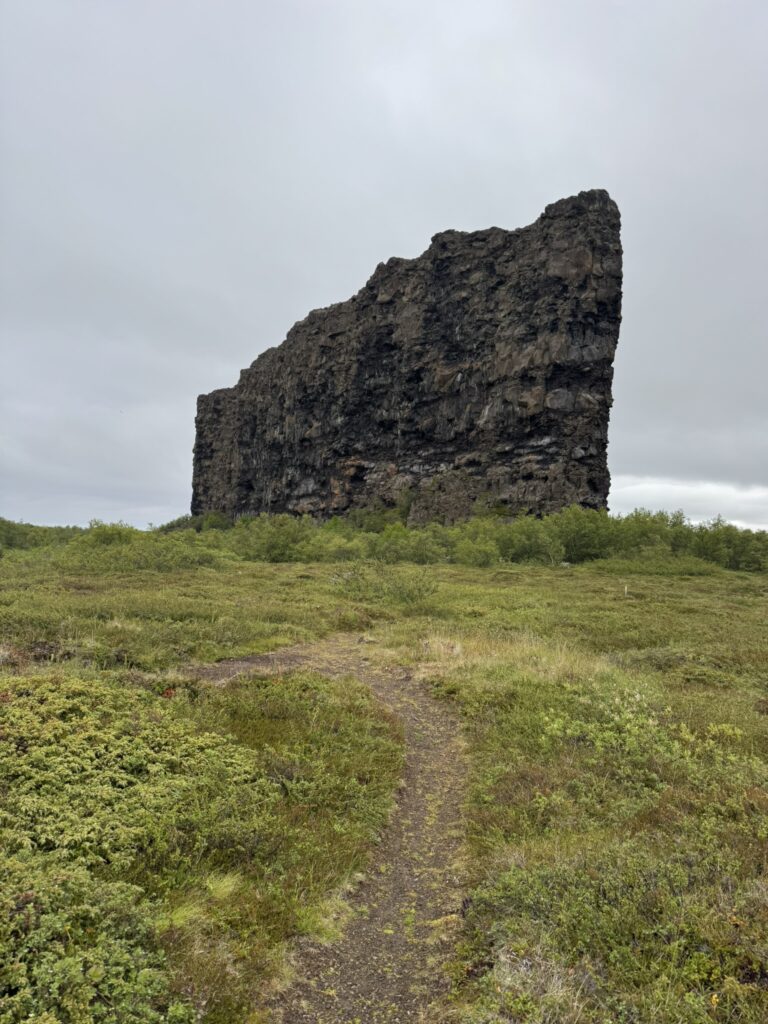
What surrounds it is extraordinary. Ásbyrgi is a horseshoe-shaped canyon with sheer rock walls rising on three sides — according to Norse mythology, it was formed by Odin’s eight-legged horse Sleipnir touching down to earth. Whether or not you buy the legend, the geology is remarkable.
I walked from the campsite down to the far end of the canyon one evening. Fair warning: don’t underestimate it. The path to the bottom is roughly an hour each way and the terrain is uneven in places — it’s a proper hike, not a stroll. But going in the evening means you have a real chance of having the whole canyon to yourself. I walked the full route without seeing another person. The birds, the rock walls, the fading light — it’s the kind of thing that makes you glad you didn’t just stay at the main tourist stops.
Where to Eat: Honest Answer, Low Bar
Food options around Mývatn are limited. This is not a destination for good restaurants — adjust your expectations accordingly and pack supplies if you’re particular about meals.
That said: Fish and Chips Lake Mývatn is worth knowing about. It’s a roadside spot, no pretensions whatsoever — a proper Imbiss rather than a restaurant. After a full day of hiking and driving I arrived genuinely starving, which probably coloured my judgement slightly, but the fish and chips were legitimately good. Fresh, hot, generous portion. When you’re hungry and the options are limited, a place that does one thing well feels like a small miracle. It turned out I was not the only one: in 2026 the place won International Fish and Chip Operator of the Year at the National Fish and Chip Awards in London. The location on the lake is pleasant, and it is open daily from 11:30 to 22:00.
Beyond that: stock up in Akureyri before you head to Mývatn. Seriously.
The Midge Situation: Real, But Manageable
Mývatn means “Midge Lake” in Icelandic. This is not a coincidence. In summer — particularly June through August on calm, warm days — the midges swarm. The lake midges do not bite; they just get in your eyes, your nose and your coffee, which is annoying rather than dangerous. The blackflies along the Laxá river are a different insect and those do bite, so a head net earns its keep there.
A cheap head net solves most of the problem. You can buy one locally. Stay away from the lake edge at dusk. Any breeze clears them immediately, so if you’re unlucky with midges in the morning, a bit of wind usually sorts it by afternoon. Don’t let it put you off — the landscape more than makes up for the inconvenience.
Add a Half-Day: Húsavík for Whale Watching
Húsavík is roughly 45–60 minutes from Mývatn and calls itself the whale watching capital of Iceland — with good reason. If you have a second day and the weather cooperates, the combination of a morning at Mývatn and an afternoon whale watching tour * makes for one of the better days you can put together on the Ring Road.
Two operators sail out of the harbour, North Sailing and Gentle Giants *. Humpbacks are common, minke whales too, and white-beaked dolphins turn up on most trips.
The tour I would book in Húsavík
Gentle Giants, a traditional Icelandic oak boat out into Skjálfandi Bay. Warm overalls are handed out at the dock, and the crew cuts the engine once they are near the animals.
3 hoursfrom €85free cancellation up to 24 hours
Check dates and prices *Final Honest Take
Mývatn doesn’t try to impress you the way the South Coast does. There’s no single waterfall you can drive up to, photograph from a boardwalk, and tick off a list. The rewards here are slightly more earned — you have to walk up the hill at Hverir, turn into the quiet parking lot at Kálfaströnd, hike to the end of the canyon at Ásbyrgi in the evening light.
Do that and it’s one of the best stretches of the Ring Road. Rush through it and you’ll wonder what the fuss was about.
Two days. Go slow. Walk past the crowd.
The two Mývatn days sit on day 9 and 10 of the route I drove. If you want the whole loop with the campsites, the driving times and what it actually cost, that is what my Iceland Ring Road Campervan Guide is.
Before you go
Planning your own Ring Road trip?
Iceland Ring Road Campervan Guide
My full 14-day route — 2,500 km, every campsite, what I spent, and the detours worth taking. The plan I drove, in one PDF.
How I booked my campervan
I compared three rentals before I chose mine. These are the ones worth checking — Lava gives 5% off with code CREATOR.