

Short answer: guesthouses in the villages, booked well ahead. I booked all of mine about a month before my June hike. There is often one small place per stage, wild camping is banned inside the natural park, and I paid around €50 a night for the family-run rooms and up to €120 for the two design-led ones — roughly €900–1,100 for 11 nights. My picks stage by stage are below.
One of the first questions I had before walking the Fishermen’s Trail was simple: where do you actually sleep? The trail runs through a protected natural park along one of Europe’s last truly wild coastlines — which means villages are small, options are limited, and booking in advance is not optional. It’s essential.
These picks follow the exact stages of my 12-day Fishermen’s Trail itinerary.
I walked the full 12 stages from Praia de São Torpes to Lagos and had a bed booked for every stage before I left. Here is what I learned — and my honest picks for each stop.
Why Accommodation Planning Matters More Than You Think
The Fishermen’s Trail is a linear route through remote terrain. Between villages, there are no hotels, no hostels, no shortcuts. If the guesthouse at your planned stop is full, the next option might be miles away — and your legs will already have covered 20 kilometres of sand and cliffs that day.
Book well ahead, especially for late May and June, the busiest weeks on this coast. If you are travelling in winter, always confirm that your chosen guesthouse is actually open — some operate seasonally. Beds are the one part of my Fishermen’s Trail preparation I would never leave to the last minute.
On budget: reckon on roughly €50 a night for the simple, family-run guesthouses and around €120 for the two design-led places on the route. That is the range I paid, and it is worth knowing before you start booking — this is not a hostel trail. Where accommodation sits inside the total trip budget is in my cost breakdown for the 12 days.
Before I get into the picks, one question I hear a lot: what about camping?
Is Camping an Option?
Technically there are a handful of designated campsites along the route, but I would not plan your trip around them. The entire trail runs through the Sudoeste Alentejano e Costa Vicentina Natural Park, where camping is strictly regulated and wild camping is prohibited to protect the fragile coastal ecosystem. Beyond the legal side, the Atlantic coast at night is cold, windy, and humid even in warmer months — a tent offers very little protection. And after a full day hiking through deep sand, your body genuinely needs a proper bed and a warm shower to recover for the next stage. For a deeper look at what the trail physically demands, read my Fishermen’s Trail difficulty guide.
My Stage-by-Stage Accommodation Picks
Rather than listing all twelve stops — that’s exactly what my full 12-day guide is for — I want to share a few stages that stood out and give you a feel for what accommodation on the trail is actually like.
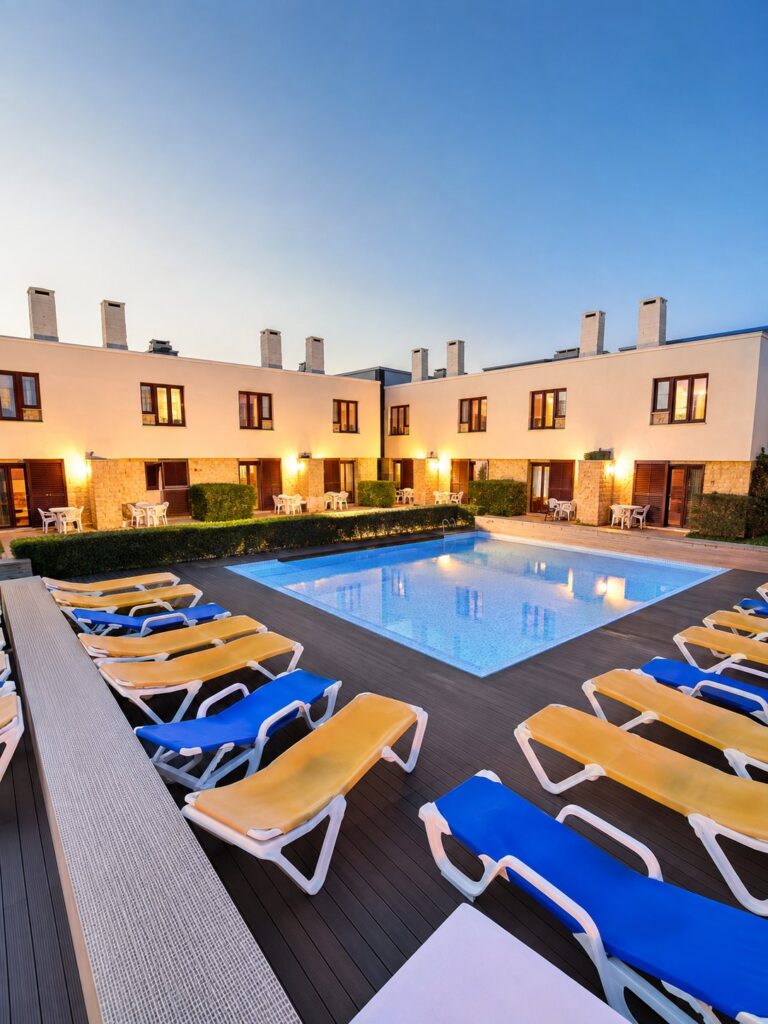
Day 1 — Porto Covo: Hotel Apartamento Porto Covo
A practical and comfortable start. Private bathroom, air conditioning, breakfast included, free parking and Wi-Fi. It is not particularly stylish but it delivers exactly what you need after a sandy first stage into this charming blue-and-white village.
Day 4 — Zambujeira do Mar: Ondazul B&B
This was one of my favourite stops on the entire trail. Ondazul is a welcoming, exceptionally clean B&B just outside the village centre — quiet enough for a real night’s sleep, close enough to walk to the beach. Air-conditioned rooms, modern en-suite bathrooms, private balconies, and a solid breakfast buffet to fuel the next day. After the demanding 21-kilometre stage from Almograve past the Cabo Sardão lighthouse and its famous cliff-nesting storks, arriving here felt like a proper reward.
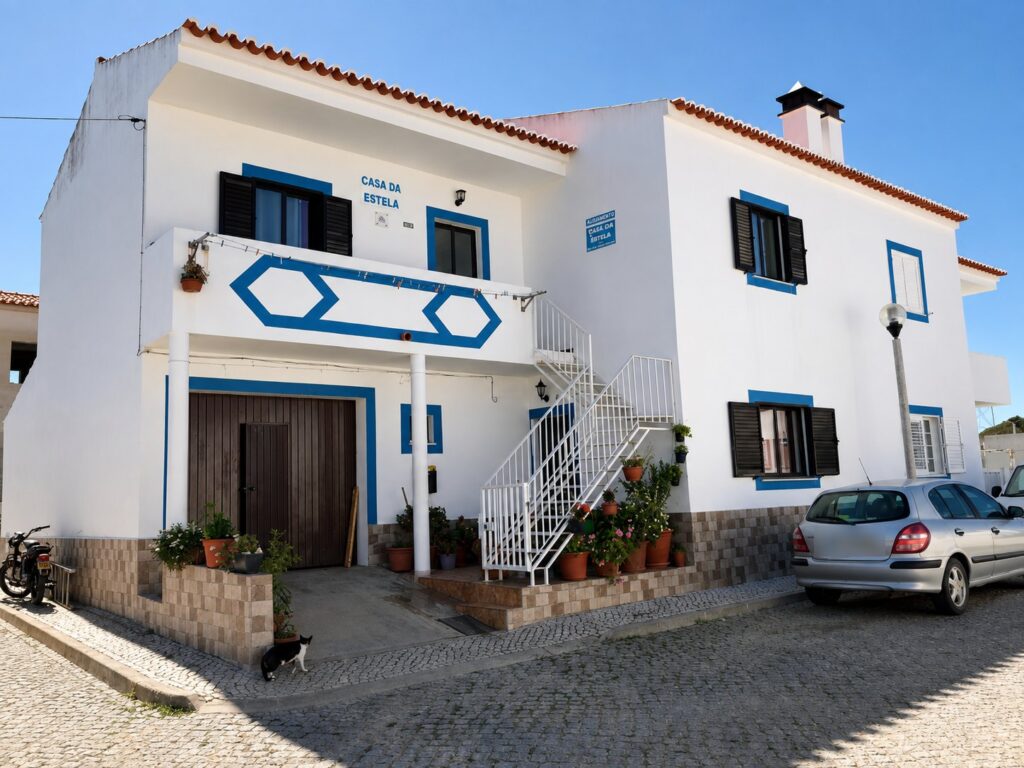
Day 8 — Carrapateira: Casa Da Estela
My personal highlight of the entire trip. Casa Da Estela is a simple, authentic guesthouse run by one of the warmest hosts I have ever encountered. She spoke only Portuguese, I spoke almost none — and it did not matter at all. She welcomed me like a guest in her home, offered to wash my hiking clothes caked in days of sand, and surprised me the next morning with a bowl of homemade yoghurt. Cosy rooms, private bathrooms, mountain-view terraces and a shared kitchen. This is the kind of place that defines the Fishermen’s Trail experience.
Day 9 — Vila do Bispo: Pure Flor de Esteva
Easily the most beautiful accommodation on the entire route. Beautifully styled rooms, outstanding modern bathrooms, a cosy shared kitchen, and an excellent breakfast served at a nearby sister property. After nine days on the trail, this place felt genuinely luxurious. The highest-rated stop of my trip.
Day 11 — Salema: Hotel Residencial Salema
An exceptionally clean, family-run hotel right on the town’s main beach. Every room has a balcony with a direct sea view. The staff is famously welcoming and the breakfast sets you up perfectly for the final stage push into Lagos. Falling asleep to the sound of the Atlantic after eleven days of hiking is something I will not forget.
The Full Picture
In my 12-day Fishermen’s Trail guide I have a personal accommodation recommendation for every single stage — including the stops I have not covered here. Each pick comes with an honest description and a 1 to 5-star rating based on my own experience, so you can plan your nights as carefully as your days.
Get the complete 12-day Fishermen’s Trail guide here
The trail is one of the most rewarding hikes in Europe. With the right places to sleep, it becomes unforgettable. Boa viagem!
Before you go
Walking the Fishermen’s Trail?
Fishermen’s Trail Portugal Guide
All 12 stages I walked solo — daily distances, where I slept, water stops, and the climbs nobody warns you about. One PDF.