
Short answer: moderate. The Fishermen’s Trail is 226 km over 12 stages — 15 to 22 km and 5 to 7.5 hours a day, with about 3,900 m of ascent spread across dozens of small climbs. There is no single hard climb. What makes it difficult is the sand (up to 70 per cent of some stages), the weight of a multi-day pack, and the sixth consecutive day. I was 45, had never done a multi-day hike before, and finished it.
Planning the Fishermen’s Trail and wondering if you’re fit enough? Here’s my honest take — as someone who had never done a multi-day hike before.
If you want to see how the whole route breaks down day by day, here’s my full 12-day stage plan.
I’m 45. Before the Fishermen’s Trail, my longest hike was a single day in the Alps — maybe 1,200 metres of elevation gain, back home for dinner. No multi-day experience, no long-distance trail under my belt. I had no idea what I was getting into.
Here’s what I found out. And if you are still weighing up the trip, my full cost breakdown has the numbers.
The Trail at a Glance
If you regularly hike full days in the mountains, you can do the Fishermen’s Trail. The elevation is not the challenge here — it’s everything else. The sand, the weight on your back, the heat, and the cumulative effect of doing it day after day. None of it is insurmountable, but all of it will surprise you if you’re not prepared.
226 km total12 stages15–22 km a day5–7.5 hours walking~3,900 m of ascentup to 70% sand
What’s Actually Difficult — And What Isn’t
The elevation is fine, but not quite for the reason you think. There is no single big climb on the Fishermen’s Trail, no pass, nothing that will stop you in your tracks. What there is: roughly 3,900 metres of ascent across the full 226 km, which comes out at 200 to 500 metres a day in dozens of small climbs and drops along the cliff edge. It adds up quietly rather than all at once. If you can handle a day in the Alps, your legs are strong enough.
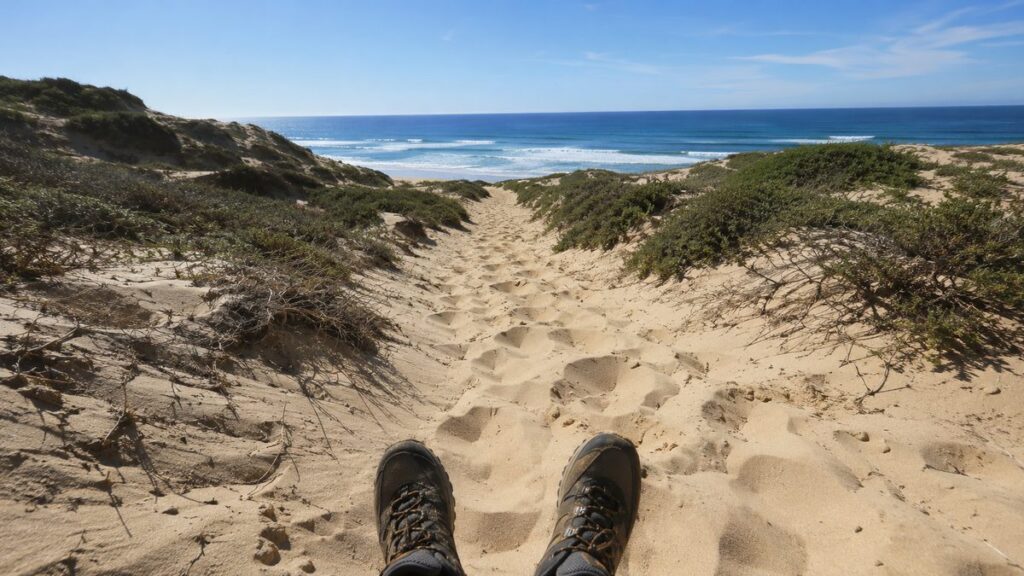
The sand is the real challenge. Nobody tells you this before you go, but hiking on soft coastal sand is genuinely hard work — and depending on the stage, up to 70 per cent of the walking is on it. It slows you down, drains your energy, and gets into your shoes constantly. A kilometre on sand feels nothing like a kilometre on a mountain path. Don’t judge stages by distance alone — factor in how much beach and dune terrain is involved. It is also the one thing you cannot train for at home, which is why I think most Fishermen’s Trail preparation is overdone.
The weight on your back matters more than you think. I underestimated this. I was used to day hiking with a light pack. A multi-day pack with clothing, food, and water is a completely different experience — especially on day one before your body adapts. The single most important thing I learned: get the hip belt properly adjusted so the weight sits on your hips, not your shoulders. A good rucksack fitted correctly makes an enormous difference. Don’t skimp on this.
The cumulative fatigue is real. Individually, most stages are manageable. But after five or six consecutive days, your body is tired in a way that’s different from a single hard day out. One or two stages were tougher than expected — not because they were technically difficult, but because my legs were already carrying several days of effort. Build in a rest day if you have the flexibility.
The Sand and Your Feet: A Practical Warning
Sand and feet are not friends over 12 days. Blisters are almost inevitable — sand works its way into your shoes no matter what you do, and the constant friction adds up. My advice: don’t wait until you have a blister to deal with it.
Standard blister plasters help but have limits — they shift, they come unstuck, and they don’t always hold on moving skin. My best tip, learned the hard way: climbing tape. You can wrap it around problem areas before blisters form, and it stays put far better than any plaster. If something feels sore at the end of the day, tape it before the next morning. Don’t wait.
Good, broken-in hiking shoes are non-negotiable. Not new. Not trail runners you’ve worn twice. Shoes that know your feet.
The Sun Will Catch You Out
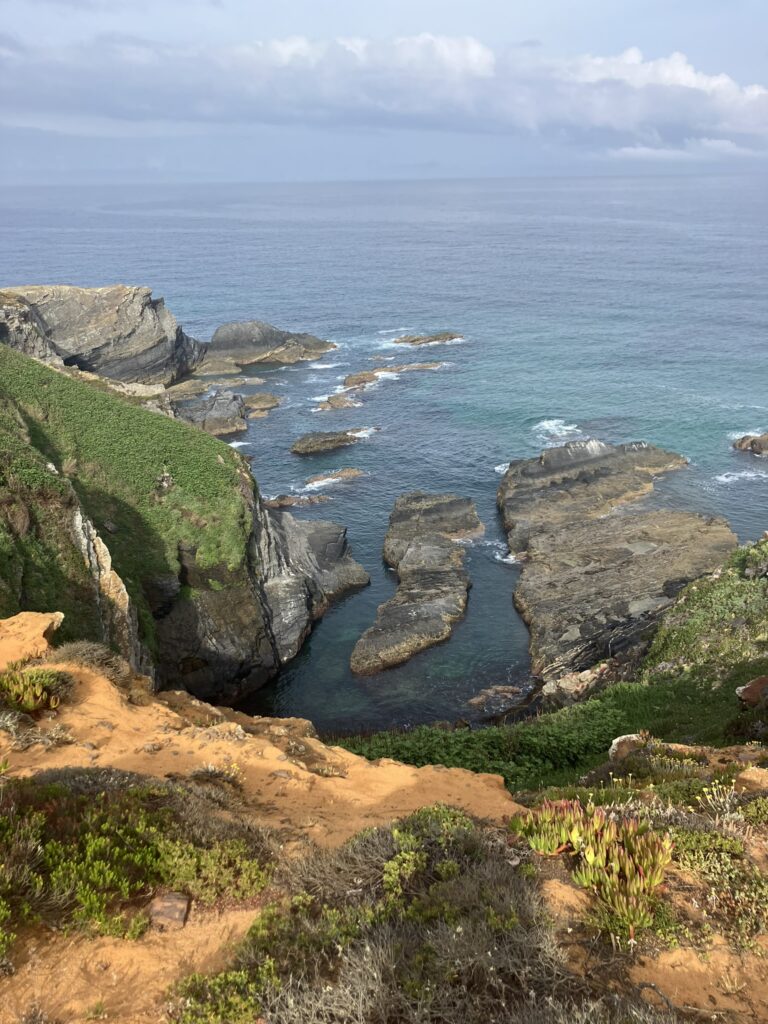
The Atlantic coast of Portugal looks deceptively mild. Even on days when the sun isn’t blazing and the wind is coming off the ocean, you are exposed for hours at a time with almost no shade. I got caught out more than once.
A hat is not optional. Not a nice-to-have — a genuine necessity. The Atlantic wind masks how much sun you’re actually getting, and by the time you feel it, the damage is done. Pack a cap or a wide-brim hat and wear it every day regardless of how the morning looks.
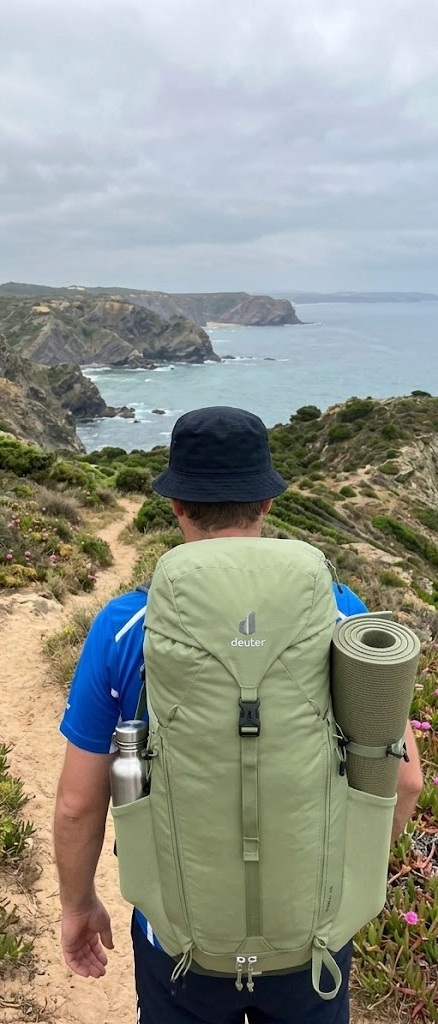
Sunscreen, water, food. Bring more of each than you think you need. Resupply options between stages are limited — don’t rely on finding a café or shop at the right moment.
Who Can Do This Trail?
Honestly: most reasonably fit people who hike regularly. You don’t need to be an athlete. You don’t need previous long-distance experience — I had none. What you do need is:
- Decent base fitness from regular hiking or walking
- The right gear, properly fitted
- Realistic expectations about daily effort
- Good foot care from day one
What will make it harder than it needs to be: a bad rucksack, new shoes, ignoring small problems on your feet, and underestimating the sand.
My Honest Rating: Moderate — With Caveats
For an experienced hiker: moderate. Long days, sometimes demanding terrain, but nothing technically challenging.
For a first-time long-distance hiker: moderate to challenging — not because of the trail itself, but because of the learning curve around gear, pacing, and daily recovery. That learning curve is real, but it’s also part of what makes finishing so satisfying.
I had never done anything like this before. I finished it. It was hard in the right ways.
Ready to Plan Your Hike?
My complete 12-day Fishermen’s Trail guide covers every stage in detail — distances, elevation, surface conditions, accommodation picks and logistics from Praia de São Torpes to Lagos. Everything I wish I’d had before I started.
Before you go
Walking the Fishermen’s Trail?
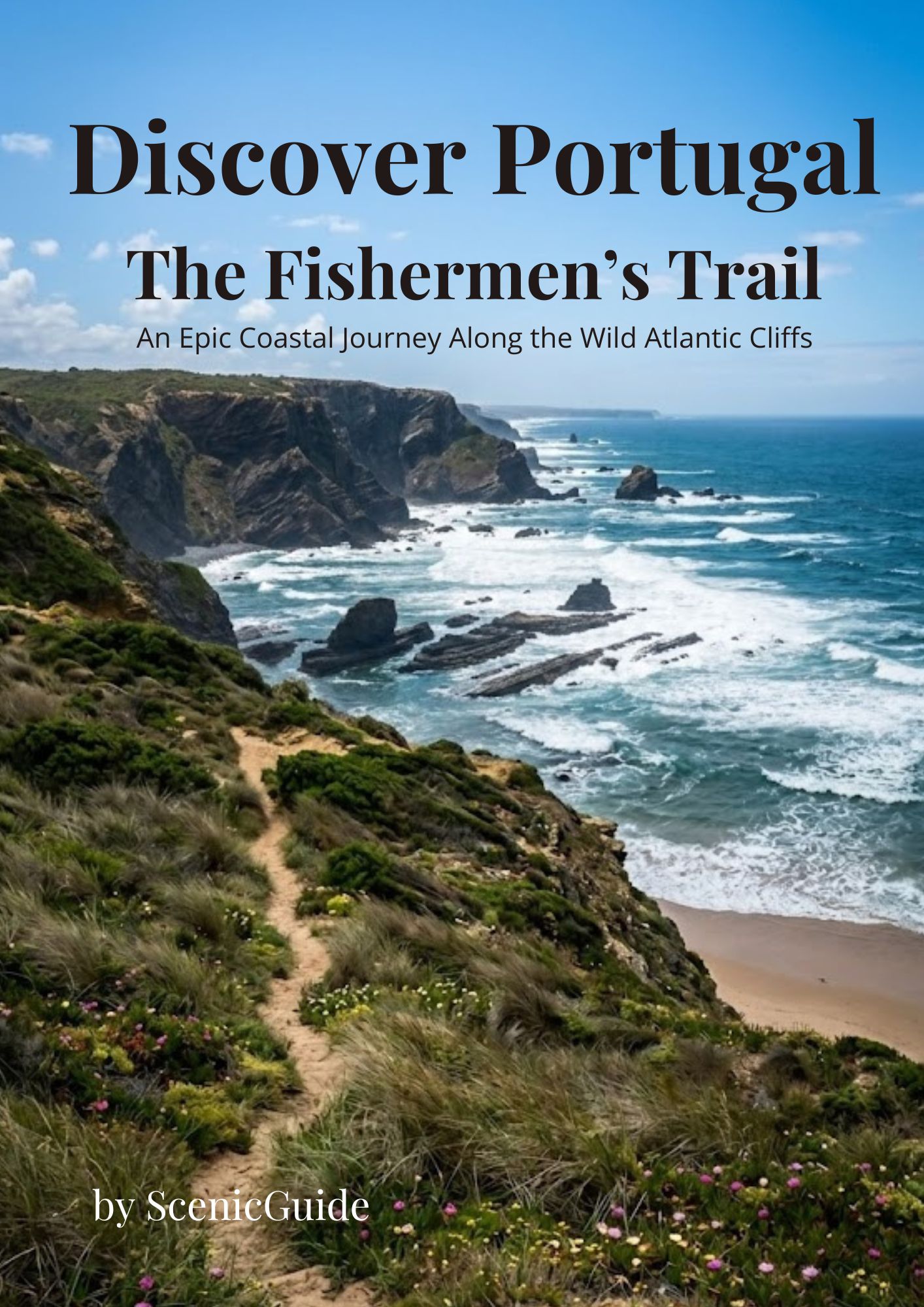
Fishermen’s Trail Portugal Guide
All 12 stages I walked solo — daily distances, where I slept, water stops, and the climbs nobody warns you about. One PDF.