

There isn’t a best month to visit Iceland. There’s a best month for the trip you actually want, and those are two different questions that most guides smash together.
Iceland runs as two completely different countries depending on when you land. Summer gives you 20-plus hours of daylight, open roads and every attraction reachable. Winter gives you the northern lights, ice caves and hotel rates a long way below summer. You can’t have both on one trip, so the honest first step is deciding what you came for.
I drove the full Ring Road solo in July. I’ll tell you where that lands in all this, and I’ll be straight about the trade-offs for every other window too.
Advertising disclosure: Links and buttons marked with * are affiliate links. If you book through one of them I earn a small commission — the price stays exactly the same for you.
The two Icelands, in one paragraph
If the northern lights are non-negotiable, you need darkness, which means roughly late September through March. If open roads, hiking and the midnight sun are the point, you need June through August. Those two lists don’t overlap. The northern lights are invisible in June and July because of the constant daylight, and that’s the single real trade-off of a summer visit. Everything else in this post is detail on top of that one decision.
Iceland month by month, at a glance
| Month | Daylight | °C high / low | What you get |
| January | 5 h | 2 / -2 | Aurora, ice caves, very short days |
| February | 8 h | 3 / -2 | Aurora, ice caves, more usable light |
| March | 11 h | 3 / -1 | Aurora into late March, snow on roads |
| April | 15 h | 6 / 1 | Puffins arrive, prices still low |
| May | 18 h | 10 / 4 | Waterfalls at full force, no highlands |
| June | 21 h | 12 / 7 | Midnight sun, F-roads start opening |
| July | 19 h | 13 / 9 | Everything open, peak prices |
| August | 16 h | 13 / 8 | Puffins to mid-month, dark returns |
| September | 13 h | 10 / 6 | Aurora back, highland roads close |
| October | 10 h | 7 / 3 | Aurora, quiet roads, first snow |
| November | 7 h | 4 / 0 | Ice caves open, low prices |
| December | 4 h | 2 / -2 | Shortest days, festive-season prices |
Daylight is Reykjavík around the 15th of each month, temperatures are long-term Reykjavík averages. The north and the interior run colder, and the Ring Road weather is not the capital’s weather.
Summer: June to August
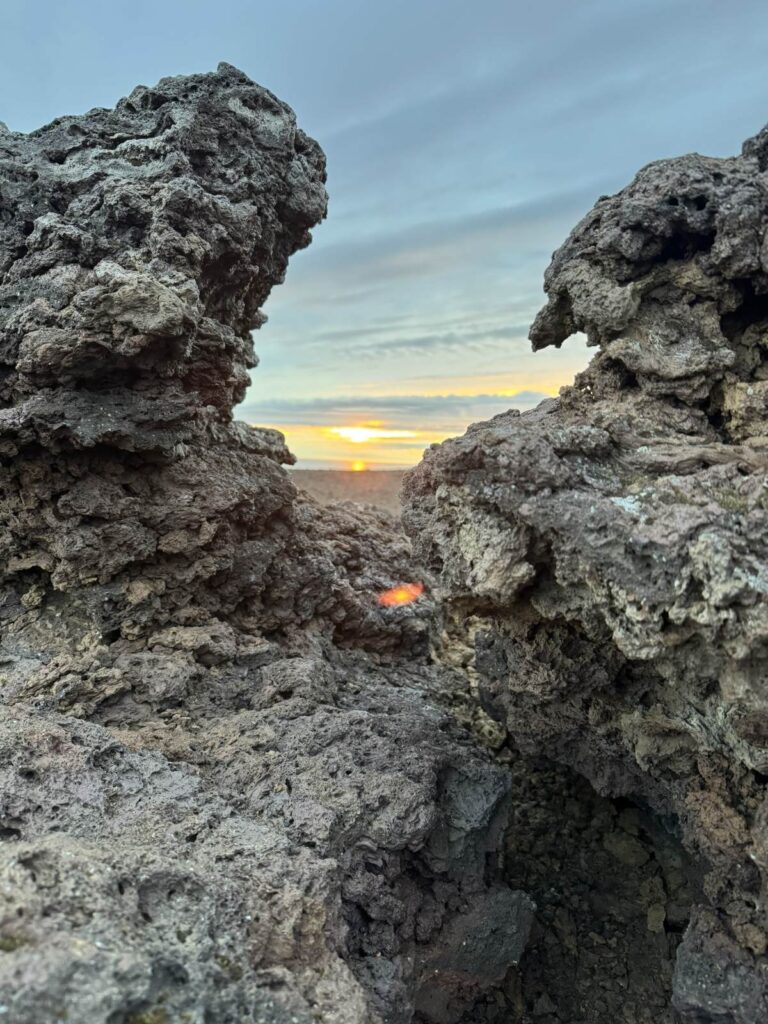 This is peak season, and it’s peak for good reasons. Summer brings 20-plus hours of daylight, temperatures around 10 to 15°C, all highland F-roads open, puffins until mid-August and whale watching. It’s also when the full Ring Road is genuinely easy to drive, which matters more than people expect.
The catch is money and crowds. Summer flights run 40 to 60% more expensive, accommodation books months ahead, and the popular sites are crowded. That last part is real. The Golden Circle in particular gets very busy, and I felt it — the well-known stops were packed by mid-morning.
The fix isn’t avoiding summer. It’s going slightly against the clock. Because it never gets dark, you can visit the famous spots late in the evening when the coaches have gone, and hit the remote corners any time because nobody’s there anyway. On Snæfellsnes I climbed Saxhóll crater close to midnight with not another person in sight.
Late June and early July are where I’d point most first-timers. That window has everything open and the light at its longest. June sits just under the July price peak, so if you can shift a couple of weeks earlier, do. I went in July and never once wished for more daylight.
On the weather: don’t trust the word “summer” to mean warm. Mine was changeable, windy, with plenty of rain — but there was always a window to get out and do something. Some nights were genuinely cold and I needed a proper sleeping bag. Then, at the very end near the Golden Circle, it turned warm enough for shorts and a t-shirt. A sunny morning can become a grey, windy afternoon, so layers and waterproofs are essential regardless of season.
One more thing about the light. It’s less extreme than the far north of Norway, but it’s still constant, and it will mess with your sleep if you let it. Bring an eye mask, because most guesthouses have thin curtains. With one, it was a non-issue for me, and I got to use those midnight hours for touring instead of lying awake.
Shoulder season: May and September
If crowds and cost are your main problem with summer, the shoulder months are the underrated answer.
May gets you long days and lower prices before the peak arrives. Puffins are starting to show up, waterfalls run at full force from snowmelt, and the roads in the lowlands are clear. The highlands aren’t open yet, so the interior and Landmannalaugar are off the table.
September is the month I’d pick if high summer were off the table. You still get 12 to 13 hours of daylight in the first half, the crowds thin out, and the aurora starts showing again as the nights lengthen. The trade-off: highland roads close in September, though the Ring Road and main attractions stay accessible.
If I were going back and couldn’t travel in high summer, September is exactly where I’d aim.
Winter: October to March
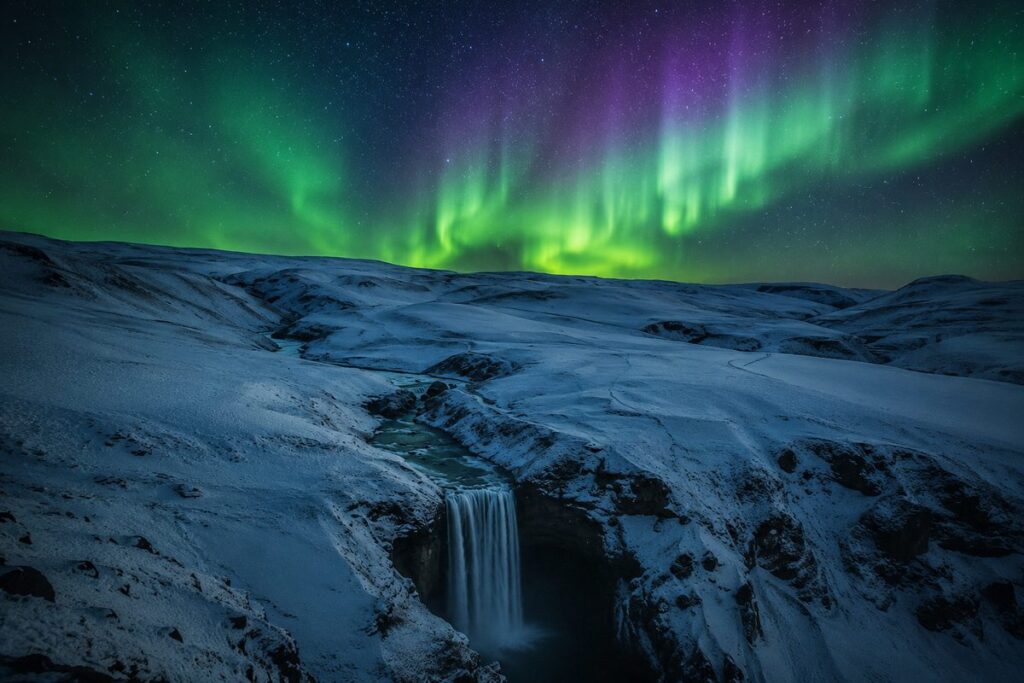
A completely different trip. Winter means only 4 to 5 hours of daylight in December and January, cold temperatures, frequent storms and road closures, but the best chance of the northern lights and the only time glacier ice caves are safely accessible.
The pull is obvious: aurora and ice caves are winter-only, full stop. Northern lights are frequent on clear nights, and the ice caves are at their best in the coldest months. The cost is equally real — short days, real driving hazards, and some regions effectively closed. Roads in the north can be impassable, and winter driving here is its own skill, so the south coast and Reykjavík area are the safest options.
Winter is not the season for a first-timer trying to drive the whole Ring Road solo. It’s the season for a focused trip: south coast, aurora, ice cave, done well rather than done fully.
The highland question
If Landmannalaugar, Þórsmörk or any F-road route is on your list, your window is narrow and worth planning around. The F-roads typically open between early June and early July and close again from late August to October depending on weather, so always check official road updates before heading into the interior.
I stayed on paved roads for my entire Ring Road loop and never touched an F-road, which is completely doable and something I’d tell nervous first-timers outright. But if the highlands are the reason you’re coming, you’re locked into mid-summer, and even then the exact opening depends on snowmelt that year.
So when should you go?
Quick version, by what you actually want:
- First Ring Road trip, want it easy: late June to mid-August. Everything open, warmest weather, midnight sun.
- Same trip, hate crowds and cost: May or September. The sweet spot.
- Northern lights are the whole point: October, February or March. Long dark nights plus a real chance of clear skies.
- Ice caves and aurora together: deep winter, but keep the route tight and southern.
I went in July and I’d make the same call again without hesitating. It gave me open roads, endless light to work around the crowds, and weather that ranged from sleeping-bag cold to shorts warm inside two weeks. That range is the trip. You just have to pack for all of it.
Whichever month you pick, the route is the other half of the decision. Every campsite, driving day and cost from my 14-day summer loop, plus the exact route I’d drive again, is in my Iceland Ring Road Campervan Guide.
Working out the budget too? My 14-day Ring Road cost breakdown has the real numbers, and if you’re still choosing a vehicle, here’s my campervan rental comparison.
Before you go
Planning your own Ring Road trip?
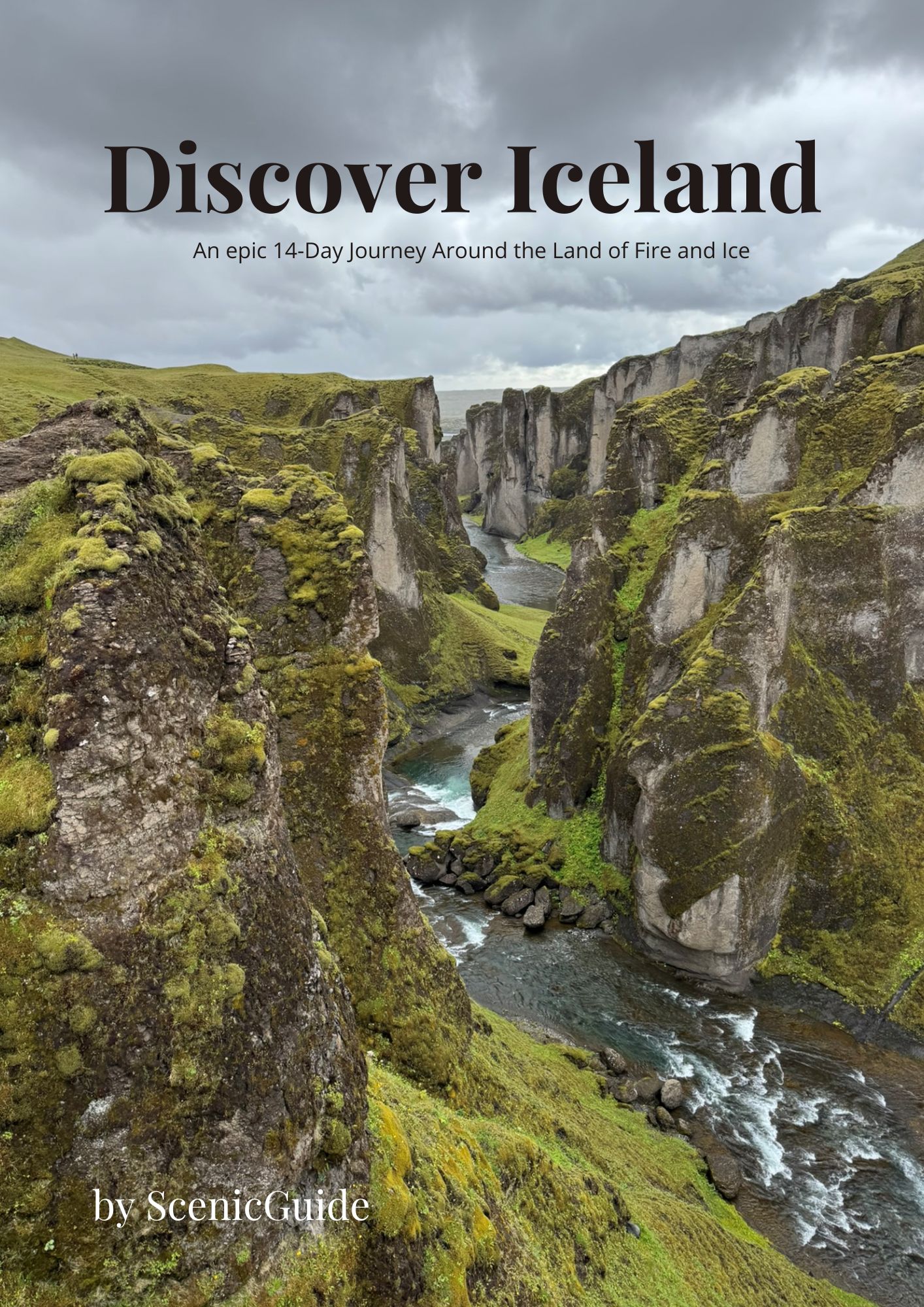
Iceland Ring Road Campervan Guide
My full 14-day route — 2,500 km, every campsite, what I spent, and the detours worth taking. The plan I drove, in one PDF.
How I booked my campervan
I compared three rentals before I chose mine. These are the ones worth checking — Lava gives 5% off with code CREATOR.