

Iceland has a reputation for being brutally expensive. And honestly — in some ways, it is. But after 14 days in a campervan around the Ring Road, I can tell you that food costs are the one area where a campervan traveller has a real advantage. You control your kitchen. You shop where locals shop. And you skip the tourist-trap restaurants most of the time.
Here’s exactly what I learned about eating in Iceland without going broke. Every number below is from my full 14-day Ring Road itinerary.
The Two Supermarkets You Need to Know: Bónus vs Krónan
These are your two best friends on the Ring Road. Both are significantly cheaper than the smaller rural shops or petrol station convenience stores you’ll encounter elsewhere.
Bónus is the budget king. The chain’s distinctive pink piggy-bank logo becomes a welcome sight after a few days on the road. Prices across the board are lower than almost anywhere else in Iceland. Stock up here whenever you pass one — especially in Reykjavík before you leave, and again in Akureyri around the halfway point. Bónus has fewer locations outside the main towns, so don’t rely on stumbling across one mid-Ring Road. And watch the clock: most Bónus branches only open around 11:00 and shut by 18:30 or 19:00 on weekdays, later on Saturdays and from midday on Sundays. Roll in at eight in the evening after a long driving day and you are shopping at a petrol station whether you like it or not.
Krónan is slightly more expensive than Bónus but still far cheaper than smaller shops. It has a broader distribution around the island, which makes it a solid fallback when Bónus isn’t nearby. The range of fresh produce and ready-to-cook items tends to be good.
My rough rule on the Ring Road: Bónus when available, Krónan as backup, everything else only for emergencies.
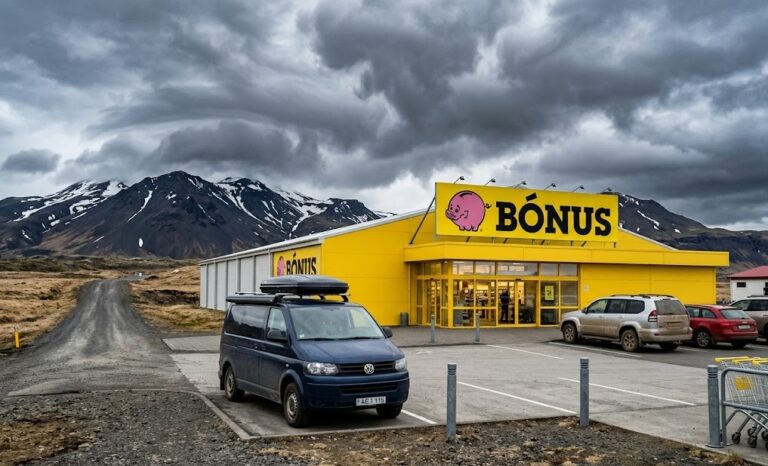
Both chains have apps and loyalty cards, though as a short-term visitor the cards are rarely worth the setup time.
Price Comparison: What Things Actually Cost
To give you a realistic baseline, here are rough prices across Bónus and Krónan in 2026:
| Item | Approx. Price |
|---|---|
| Bananas (1 kg) | €2.70–4.00 |
| Milk (1 L) | €1.35–1.70 |
| Bread (loaf) | €3.40–5.40 |
| Pasta (500 g) | €2.40–3.70 |
| Chicken breast (1 kg) | €13.50–19.00 |
| Eggs (12) | €5.00–6.00 |
| Skyr (500 g) | €3.40–3.70 |
| Cheese (500 g) | €8.50–12.00 |
| Tuna (tin) | €2.00–2.50 |
A few of these are worth highlighting. Chicken breast at €13–19 per kilo is the number that surprises most people — that’s the Iceland reality check moment. Bread is also noticeably expensive compared to the rest of Europe. The budget-friendly items are eggs, tinned food, pasta, and skyr. Those are what you build your campervan diet around.
Cooking your own meals brings daily food costs down to roughly €25–35 per person. A mix of cooking and occasional eating out puts you at €45–70. If you eat out regularly, budget €70+ easily.
The Petrol Station Food Secret
This sounds counterintuitive, but N1 petrol stations across Iceland are worth knowing for food. Not for snacks and overpriced sandwiches — but some N1 stations have surprisingly decent hot food counters with soups, lamb dishes, and daily specials that beat a tourist restaurant on price and often on quality too.
This is especially useful in the Eastfjords and other remote stretches where proper supermarkets are hours apart and you need a real meal. I wouldn’t plan around petrol station food, but I’ve had decent lunches at N1 stops that I expected nothing from.
The Rental Car Voucher Trick
Worth knowing: several campervan rental companies in Iceland include petrol station vouchers or discount codes with your booking. These aren’t always advertised upfront. When you pick up your campervan, ask specifically whether any fuel or food discounts are included with the rental. I’ve seen N1 vouchers bundled with some bookings — it won’t transform your budget, but a €10–20 discount at a petrol station over 14 days adds up.
I booked through Northbound on my trip. If you are still sorting your campervan, I compared the three companies I would use in my campervan rental comparison.
Iceland Tap Water: Free and Actually Excellent
This is one of the most underappreciated money-savers in Iceland. The tap water is glacially sourced, filtered through volcanic rock, and genuinely one of the best-tasting tap waters in the world. Fill your bottles every morning at your campsite. Fill them at petrol stations. Fill them wherever you can.
One critical note:Iceland has two separate water systems. The cold tap is the one you want — cold, clean, odourless. The hot tap smells strongly of sulphur because it comes directly from geothermal sources. It’s perfectly harmless, but you absolutely do not want to drink it or use it for cooking. The smell is immediately obvious, so you won’t miss it — but first-timers are regularly confused by it.
Bottled water in Iceland is money wasted. Never buy it.
Campervan Kitchen Strategy
Having a campervan kitchen is only an advantage if you actually use it. A few things I’d do the same or differently again:
Stock up in Reykjavík before you leave. The range at Bónus in the capital is bigger than anything you’ll find on the Ring Road, and prices are the most competitive. I spent around €80–100 on a first big shop — pasta, rice, oats, eggs, canned goods, snacks, coffee, bread. This covers the first 3–4 days and gives you a solid base to top up from.
Skyr is your friend. Iceland’s thick yoghurt-style dairy product is high in protein, filling, relatively cheap, and available everywhere. It became my standard breakfast on the road — no cooking, no dishes beyond a spoon.
The supermarket rotisserie chicken. Krónan especially often has rotisserie chickens near the deli section. One of the better budget-to-calories options when you’re tired and don’t want to cook.
Don’t over-rely on campsite kitchens. Some campsites have great facilities. Some have a single burner and no counter space. If your campervan has a hob — and most do — use that as your baseline and treat campsite kitchens as a bonus.
When to Actually Eat Out
Not every meal needs to come from the campervan. A few specific restaurant experiences are genuinely worth the money — and in my Iceland Ring Road Campervan Guide I cover exactly which places I’d go back to.
A few honest highlights from my trip:
Kjarr, near Kirkjubæjarklaustur — the best lamb I had in Iceland. It’s small, fills up fast, and reservations are essential.
Sjávarpakkhúsið in Grundarfjörður — outstanding fresh seafood. One of my favourite meals of the entire trip.
Pylsuvagninn in Akureyri — a hot dog stand, but one that uses traditional volcanic dark bread. Genuinely different from anything else.
Icelandic Street Food in Reykjavík — the soup-in-bread-bowl is cheap, filling, and a good first taste of Icelandic food before you hit the road.
The famous Bæjarins Beztu hot dog stand in Reykjavík is worth trying once, but honestly slightly overhyped at this point. Go if you’re nearby — don’t go out of your way.
Realistic Daily Food Budget
| Travel style | Daily cost per person |
|---|---|
| Mostly cooking in campervan | €25–35 |
| Mix: cooking + 1 café or lunch out | €45–60 |
| Eating out most meals | €70–100+ |
For a 14-day Ring Road trip, cooking-first with a few special meals out, I’d budget around €450–550 total for food per person.*That’s realistic rather than pessimistic — and significantly less than what most people assume before they go.
The Bottom Line
Iceland food costs are manageable on a campervan trip if you make Bónus your default, use your campervan kitchen properly, fill your water bottles from the cold tap every morning, and save the eating-out budget for the handful of places that are actually worth it.
For a full breakdown of what my 14-day Ring Road trip actually cost — campervan rental, fuel, campsites, activities, and yes, food — read my Iceland Ring Road cost breakdown.
Everything in this post comes from my own 14-day Ring Road campervan trip. My complete guide covers daily itineraries, campsite picks, restaurant recommendations, and everything I wish I’d known before I went. Available on Etsy
Header image: illustration, not a photograph of my own trip.
Before you go
Planning your own Ring Road trip?
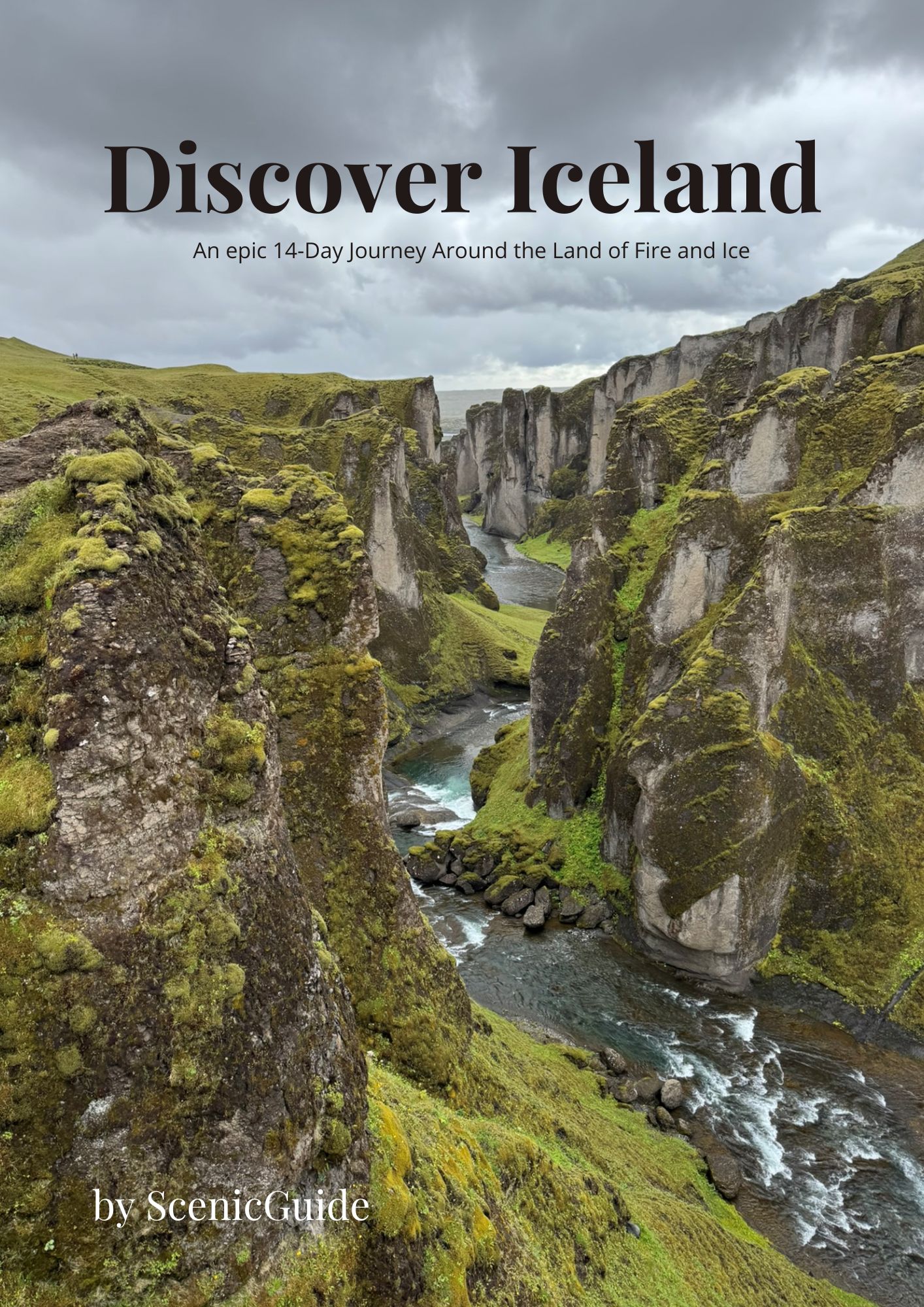
Iceland Ring Road Campervan Guide
My full 14-day route — 2,500 km, every campsite, what I spent, and the detours worth taking. The plan I drove, in one PDF.
Advertising disclosure: The rental links below are affiliate links. If you book through one of them I earn a small commission — the price stays exactly the same for you.
How I booked my campervan
I compared three rentals before I chose mine. These are the ones worth checking — Lava gives 5% off with code CREATOR.