

I walked the Fishermen’s Trail (Trilho dos Pescadores) solo in 12 days — the coastal route of the Rota Vicentina, from Praia de São Torpes all the way down to Lagos. No tour, no group, no luggage transfer. Just me, a 30L pack and roughly 226 km of Atlantic coastline. This is my complete Fishermen’s Trail itinerary, stage by stage, with honest notes on what each day actually feels like.
If you’re still wondering whether you’re fit enough for this, read my honest take on the Fishermen’s Trail difficulty first. I’m 45 and this was my first multi-day hike. It’s doable — but some of these stages will test you.
Getting to the start. I flew into Lisbon, arrived midday, and took a Rede Expressos bus down to Porto Covo with a change in Santiago do Cacém. Cheap, easy, and I was on the coast the same evening. The trail officially starts a little further north at Praia de São Torpes, so the next morning I took a short taxi from Porto Covo to the start — around fifteen minutes, and your guesthouse will call one for you. Outside high season there is also a Rodoviária do Alentejo bus a couple of times a day. No rental car needed either way, which is one of the best things about this trail. What the whole thing cost me, buses and flight included, is in my 12-day cost breakdown.
Which direction? North to south. The wind is mostly at your back, and the trail builds toward the dramatic finale at Cabo de São Vicente instead of starting with it. Almost everyone walks it this way. Do the same.
My 12-Day Fishermen’s Trail Itinerary: All Stages
Day 1 — Praia de São Torpes to Porto Covo (~10 km)
The official start, and the perfect warm-up: flat, accessible, only about 115 m of elevation gain. You trade the industrial backdrop of Sines for wild Atlantic air and finish in the blue-and-white village of Porto Covo. Short — and that’s exactly right for day one.
Day 2 — Porto Covo to Vila Nova de Milfontes (~20 km)
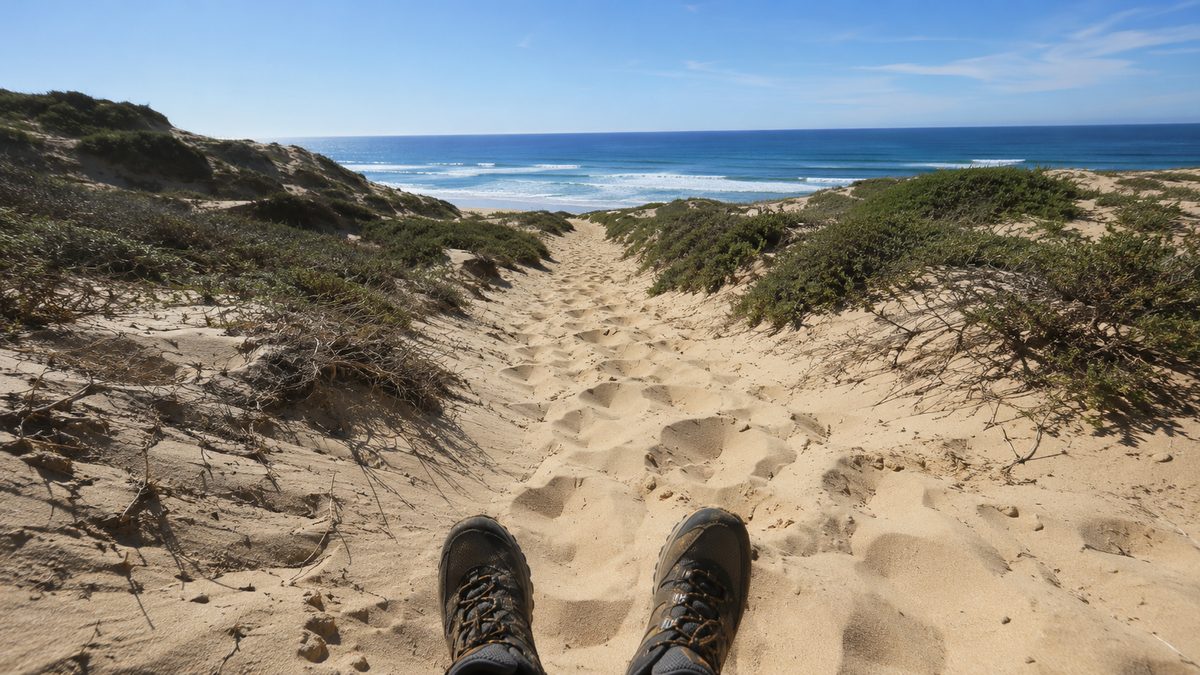
The famous sand day. Long sections of deep, soft sand that eat your energy — your calves will let you know. The reward: empty dune landscapes and your first real cliff walking.
Day 3 — Milfontes to Almograve (~15 km)
Starts with the river crossing at Milfontes — I took the small ferry across the Mira instead of the long road detour. A shorter day, which your legs will appreciate after the sand battle.
Day 4 — Almograve to Zambujeira do Mar (~22 km)
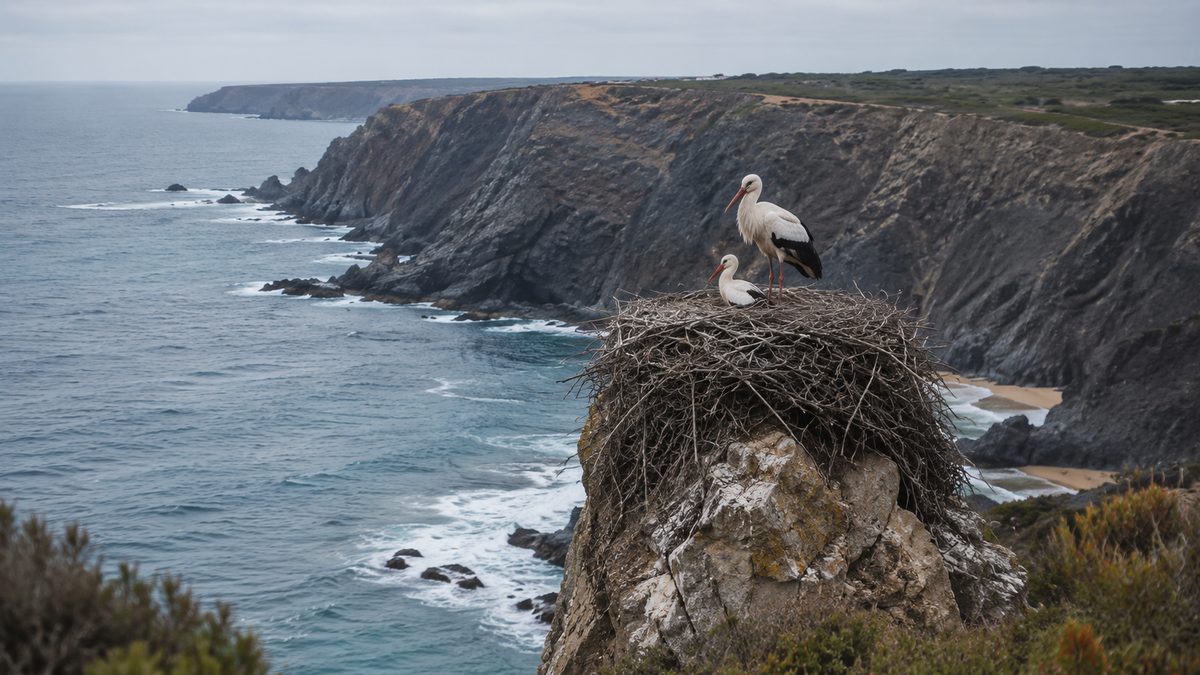
Cliff-top walking at its best. This is the stretch past Cabo Sardão — the only place in the world where storks nest on sea cliffs. I stood there alone for twenty minutes. Nobody else around.
Day 5 — Zambujeira to Odeceixe (18.9 km)
Zambujeira’s beach at sunrise is worth the early start. The stage ends above the Seixe river valley, where the Alentejo quietly becomes the Algarve.
Day 6 — Odeceixe to Aljezur (~19 km)
More inland than the days before. Less spectacular, more meditative. This is the day the trail stops being an event and becomes a rhythm.
Day 7 — Aljezur to Praia da Arrifana (~16 km)
Back to the coast, and what a return. Arrifana’s horseshoe bay from above is one of the images I still think about.
Day 8 — Arrifana to Carrapateira (19.5 km)
Wild, remote, barely a soul out there. Start early and carry enough water — there is nothing in between. Carrapateira itself is a tiny village with a big personality, and my accommodation here became the personal highlight of all 12 days. I’ve written about every single place I stayed in my accommodation guide for all stages.
Day 9 — Carrapateira to Vila do Bispo (~22 km)
Cliffs, dunes, and long stretches where the only sound is the surf below. Vila do Bispo itself is unremarkable — where I slept that night was not. Most beautiful guesthouse of the entire trail.
Day 10 — Vila do Bispo to Sagres (~20 km)
The emotional summit: Cabo de São Vicente, the southwestern tip of continental Europe. Lighthouse, wind, and a coastline that simply ends. After ten days of walking toward it, this hits differently than arriving by car.
Day 11 — Sagres to Salema (~20 km)
The character changes: softer coastline, first real Algarve beaches, more people. You feel the finish line pulling.
Day 12 — Salema to Lagos (22.3 km)
The longest finale you could ask for — about 7.5 hours of hiking past Ponta da Piedade into Lagos. Walking into a busy town after 12 days of empty cliffs is a strange, wonderful culture shock.
Three Things I’d Tell Anyone Planning This Hike
The sand is the real difficulty. Not the distance, not the elevation. Deep sand — especially early on — is what breaks people. Trekking poles help enormously on it. I walked without them and managed fine, but I am used to going without; if you normally use poles, bring them. Full gear breakdown in my packing list post.
Book your beds ahead in season. Wild camping is officially prohibited inside the Natural Park, and the villages are small. Around late May and June the good places fill up fast, so book every stage before you leave. More on that in my post on Fishermen’s Trail preparation.
Respect Day 12. Everyone assumes the last day is a victory lap. At 22.3 km and 7.5 hours, it’s the longest stage of the whole trail. Save something for it.
Fishermen’s Trail FAQ
How long is the Fishermen’s Trail? The full trail runs roughly 226 km along Portugal’s Atlantic coast, from Praia de São Torpes near Sines down to Lagos in the Algarve. It’s the coastal route of the wider Rota Vicentina network.
How many days do you need? I did it in 12 days and wouldn’t go faster. You can hike selected sections in 4–5 days — the stages between Porto Covo and Zambujeira do Mar are the most spectacular.
When is the best time to hike the Fishermen’s Trail? Spring (March–May) for wildflowers and nesting storks, or autumn (September–November) for warm ocean swims after each stage. I’d avoid mid-summer — 30°C+ with almost no shade on the cliffs.
Is the Fishermen’s Trail hard? The distances aren’t the problem — the deep sand is. Read my full difficulty assessment before you commit.
This post gives you the skeleton. My complete 12-day guide has the flesh: every accommodation I stayed in with honest ratings, where I ate in each village, exact logistics for the ferry and buses, elevation profiles for every stage, and the mistakes I made so you don’t have to. It’s the plan I wish I’d had before Day 1.
No tours. No groups. Just the plan.
Want the complete plan? My Fishermen’s Trail Portugal Guide has all twelve stages with daily distances and elevation, the guesthouse I booked each night with an honest 1–5 rating, water and food stops, and the climbs nobody warns you about — everything from this walk in one PDF. Get it on Etsy →
Before you go
Walking the Fishermen’s Trail?
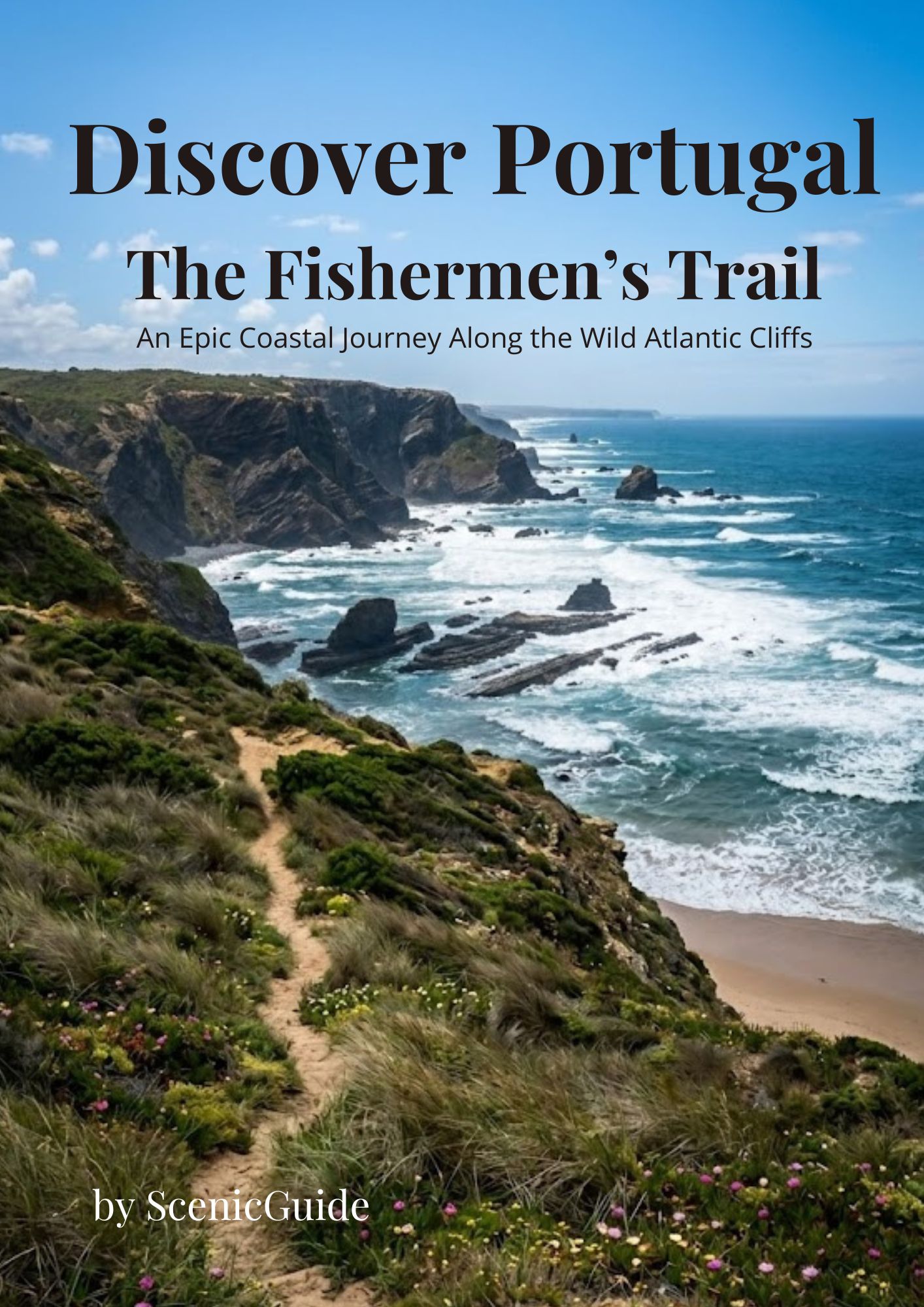
Fishermen’s Trail Portugal Guide
All 12 stages I walked solo — daily distances, where I slept, water stops, and the climbs nobody warns you about. One PDF.