

Short answer: most Fishermen’s Trail preparation is overengineered. The one thing you cannot fix on the trail is a missing bed. I booked all 12 stages about a month before my June hike, and I would not book any later. Beyond that you need three basics: broken-in shoes, one walk with a full pack, and a test pack that includes food.
Most of what gets written about getting ready for this trail did not matter once I was walking. What mattered was simple: every evening I knew where I was sleeping. Not everyone I met could say that.
This is the fishermen’s trail preparation that actually made a difference over my 12 days from São Torpes to Lagos, and the parts I would not spend time on again.
What preparation can you skip?
Start with what does not pay off. You cannot really train for this trail at home.
Two things decide how hard it feels. The first is walking 12 stages in a row with no rest day. The second is sand. Long stretches of loose sand drain your legs in a way no park loop or treadmill session copies. I wrote about that in detail in my post on how hard the Fishermen’s Trail really is.
So don’t build a three-month plan around it. Cover the basics below and let the trail do the rest.
Most of the logistics can also wait. Buses, the exact order of rest stops, where to eat on day nine. None of that needs sorting out months ahead.
When should you book accommodation?
Before you leave. All of it.
I booked every stage about one month before my hike in June. Late May and June are the busy weeks on this coast. Individual places in the stage towns do sell out, and you won’t know until you arrive.
Before day 7 I met other hikers who had booked too late. Both of the next stage towns were full, so they had to detour inland. It took two days until we were walking the same stretch of trail again.
In my experience, days 7 and 8 had the least choice:
- Day 7: Aljezur to Praia da Arrifana
- Day 8: Praia da Arrifana to Carrapateira, 19.5 km
If anything on the route sells out first, I’d expect it here. Book these two nights first.
The order matters too. Plan your stages, then book. If you book a bed before you know where each day ends, you end up with a gap somewhere, and a gap in a full stage town means a detour. My stage split is in my 12-day Fishermen’s Trail itinerary, and what the beds are like in my post on where to sleep on the Fishermen’s Trail.
The downside is real. A fully booked trail is a chain. Every link has to hold. A cancelled flight or one lost day at the start would have knocked over my whole schedule, and with every night fixed there is little room to shift. That is the price of a guaranteed bed each night. Know it before you commit.
Can you book transport last minute?
Mostly, yes.
| What | When to book | Why |
|---|---|---|
| Beds, all stages | 1 month+ ahead | Small towns sell out |
| Flight | Early | Price |
| Bus to Porto Covo | Flexible | Seats were free short term |
I landed in Lisbon around midday and took the Rede Expressos bus to Porto Covo, changing in Santiago do Cacém. You can book it online in advance, and that is the safe option. But seats were also available at short notice, so this is not something to worry about weeks ahead. The next morning a short taxi took me from Porto Covo to the trail start at Praia de São Torpes.
Flights are different. Nothing sells out, but prices climb. Book them early for the cost, not for availability. What flights, buses and beds added up to is in my Fishermen’s Trail cost breakdown.
What shoes do you need for the Fishermen’s Trail?
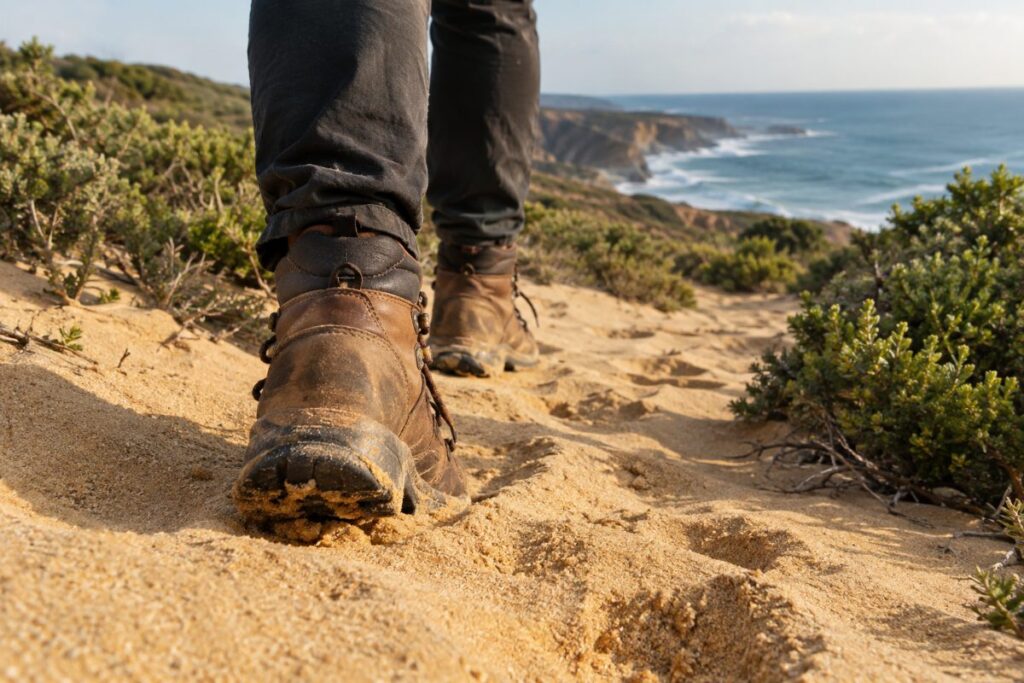
Broken-in ones. Comfortable ones. New boots straight out of the box are the fastest way to blisters on a trail like this.
My most useful blister item was climbing tape. I walked without trekking poles. I still recommend them to most people.
Should you walk with a full pack first?
If you are not using a luggage transfer, yes. At least once.
I carried a 30L pack for all 12 stages. A walk with a light daypack tells you nothing about how that weight feels after a full stage. One proper walk with the full, heavy pack does. It shows you where straps rub and whether the weight is too much, while you can still change it.
One walk is enough. It will not simulate consecutive days or sand. It just catches the obvious problems.
Keeping the pack small helped. I rotated merino wool clothing and hand-washed it every two to three days, which meant I did not need a fresh set for every stage.
What should go into your test pack?
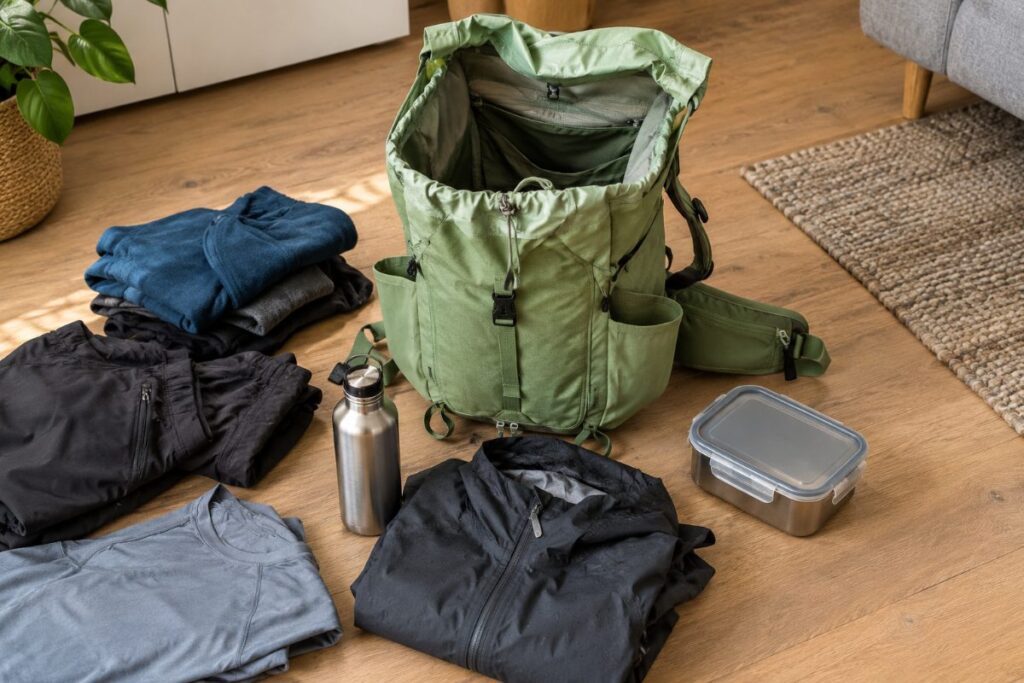
Pack everything once before you go, exactly as you will carry it. Then add food.
That second step is the one I missed. My first test pack fit well. On the trail I also carried provisions, including a food box with bread. That did not exist in my test pack. Suddenly the 30L was tight. It still worked, but only just.
So when you test pack, include what you will actually carry during the day: lunch, snacks, water. It takes up more space than it looks on a packing list. Everything I carried is in my Fishermen’s Trail packing list.
If you want the stage split and where I slept every night sorted before you book anything, my 12-day Fishermen’s Trail guide has all of it in one PDF.
Before you go
Walking the Fishermen’s Trail?
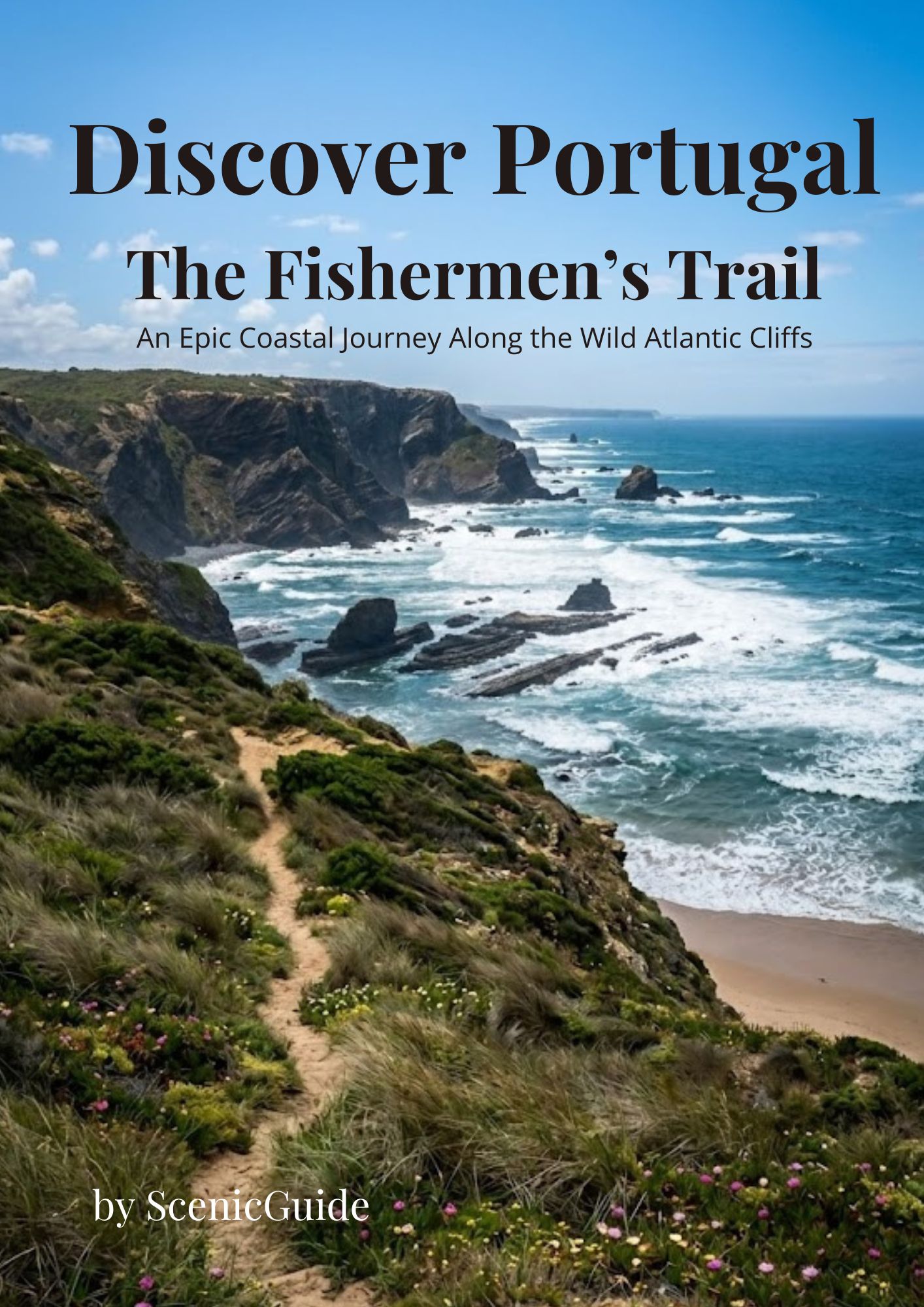
Fishermen’s Trail Portugal Guide
All 12 stages I walked solo — daily distances, where I slept, water stops, and the climbs nobody warns you about. One PDF.